US ETFs & Index Funds

Building long-term wealth in the U.S. market doesn’t require the stress of picking individual stocks. Explore the proven power of passive investing tailored for international investors. Here, we analyze the best U.S. Exchange-Traded Funds (ETFs) and index funds, explain how to navigate European UCITS regulations, and compare sector-specific funds. Discover tax-efficient, low-cost ways to track the S&P 500 and build a hands-off, globally diversified portfolio that beats inflation.

etf tracking error

ETF Tracking Error Explained: Why Your Returns Don’t Match the Index

Editor’s Picking: ETF tracking error measures the annualized standard deviation of the return gap between an exchange-traded fund and its benchmark index, driven by expense ratios, cash drag, securities lending, and cross-border dividend tax withholding. When you purchase flagship American funds like the SPDR S&P 500 ETF Trust (SPY), Vanguard S&P 500 ETF (VOO), or

ETF Tracking Error Explained: Why Your Returns Don’t Match the Index Read More »
vug vs vtv

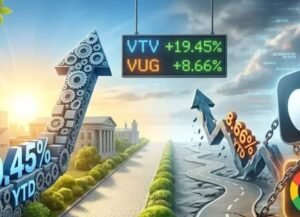
VUG vs VTV: Growth or Value in the Current Economic Climate?

Editor’s note: Choosing between VUG vs VTV depends on your macroeconomic outlook and international tax profile: Vanguard Growth ETF (VUG) excels in stabilizing interest-rate environments and maximizes tax efficiency for non-US investors through low dividend distributions, whereas Vanguard Value ETF (VTV) provides defensive cash flows and lower volatility during inflationary or high-rate cycles. Instead of guessing which

VUG vs VTV: Growth or Value in the Current Economic Climate? Read More »

rsp etf review

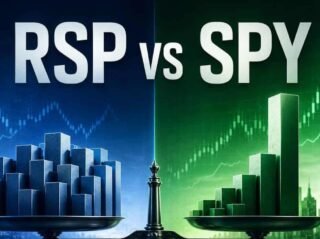
RSP vs SPY: Why Equal Weight ETFs Protect Against Tech Crashes

Editor’s choice: While SPY concentrates heavily on a few tech giants, the RSP ETF distributes your investment equally across all 500 companies, providing built-in protection during sudden tech crashes. For international investors building a US portfolio, navigating the heavy concentration of mega-cap tech stocks has become a major concern. You might think you are diversified

RSP vs SPY: Why Equal Weight ETFs Protect Against Tech Crashes Read More »

BND vs. AGG

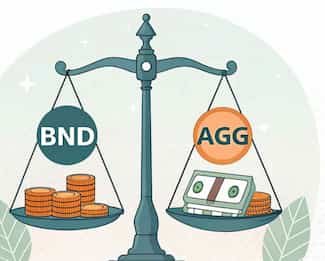
BND vs. AGG: Shielding Your USD Portfolio with U.S. Total Bond Market ETFs

Editor’s Pick: When comparing BND vs. AGG, both ETFs track the U.S. aggregate bond market with near-identical performance and ultra-low 0.03% expense ratios, making them virtually interchangeable for core fixed-income exposure. When constructing a resilient investment strategy, the debate between BND vs. AGG consistently takes center stage for income-focused investors. Balancing a high-growth equity allocation with stable fixed-income securities is

BND vs. AGG: Shielding Your USD Portfolio with U.S. Total Bond Market ETFs Read More »

vwo vs iemg

VWO vs IEMG: Which Emerging Markets ETF Fits Your Portfolio?

Investor Pick: The core difference in the VWO vs. IEMG debate is that IEMG classifies South Korea as an emerging market and includes it in its holdings, whereas VWO considers it a developed nation and entirely excludes it. Consequently, investors seeking maximum geographic breadth often lean toward the iShares product, while those prioritizing rock-bottom expense

VWO vs IEMG: Which Emerging Markets ETF Fits Your Portfolio? Read More »

nobl dividend etf guide

NOBL ETF: Investing in U.S. Dividend Aristocrats from Abroad

Investor’s Note: The NOBL ETF provides direct exposure to the S&P 500 Dividend Aristocrats, but international investors in Canada and the UK typically cannot purchase this US-domiciled fund directly due to PRIPs/UCITS and PFIC regulations, requiring the use of local synthetic equivalents or regional substitutes. Real Life Experience from The Investor When I first started

NOBL ETF: Investing in U.S. Dividend Aristocrats from Abroad Read More »

VYM vs VIG ETF

VYM vs VIG: Choosing Between High Yield and Dividend Growth

Editor’s Comment: VYM (Vanguard High Dividend Yield ETF) prioritizes immediate passive income through stocks with above-average yields, whereas VIG (Vanguard Dividend Appreciation ETF) focuses on long-term wealth compounding by targeting companies with a consistent history of raising dividends. This could be the shortest answer for VYM vs VIG. For the international investor, navigating the U.S.

VYM vs VIG: Choosing Between High Yield and Dividend Growth Read More »

dow jones modern investor

Dow Jones Index: Does It Still Matter for Global Investors?

Investor’s Note: The Dow Jones Industrial Average remains a crucial indicator of broader economic health, tracking 30 prominent US blue-chip companies, though modern investors often supplement it with broader indices for extensive technology exposure. The Dow Jones functions as a highly influential, price-weighted barometer reflecting the industrial and financial stability of the U.S. stock market.

Dow Jones Index: Does It Still Matter for Global Investors? Read More »

Top US Healthcare ETFs

Top US Healthcare ETFs: Stability for Global Portfolios!

Editor’s Comment: Investing in Top US Healthcare ETFs like XLV and VHT provides Canadian and European portfolios with a recession-resistant hedge, leveraging non-discretionary medical spending and S&P 500 stability to protect capital during global economic volatility. To effectively hedge against global market volatility, international investors should prioritize US-domiciled Healthcare ETFs that focus on high-barrier-to-entry pharmaceuticals

Top US Healthcare ETFs: Stability for Global Portfolios! Read More »

russell 2000 etfs portfolio

Russell 2000 ETFs: Best US Small-Cap Funds For Portfolios!

Editor’s Choice: Integrating Russell 2000 ETFs into your overarching investment strategy is the most mathematically efficient way to capture the raw, dynamic growth of U.S. small-cap equities without enduring the extreme volatility of picking individual stocks. While large-cap behemoths and massive technology conglomerates often dominate daily financial headlines, the true underlying engine of the American

Russell 2000 ETFs: Best US Small-Cap Funds For Portfolios! Read More »