
Editor’s Note: In a high-interest-rate environment, investors should park emergency funds in liquid, low-risk instruments like High-Yield Savings Accounts (HYSA), Money Market Funds or short-term Treasury Bills (T-Bills) to balance yield with immediate accessibility.
Maintaining a robust cash reserve is not merely a defensive tactic; it is a fundamental pillar of sound asset allocation and portfolio management. While many investors feel the urge to deploy every available dollar into the stock market to capture potential gains, the reality of market volatility makes holding cash a strategic necessity.
Many investors experience anxiety when seeing cash sitting on the sidelines while markets hit new highs, and this is completely normal. However, experts observe that true financial resilience is built by ensuring that a liquidity buffer exists to prevent the forced liquidation of long-term investments during a market downturn.
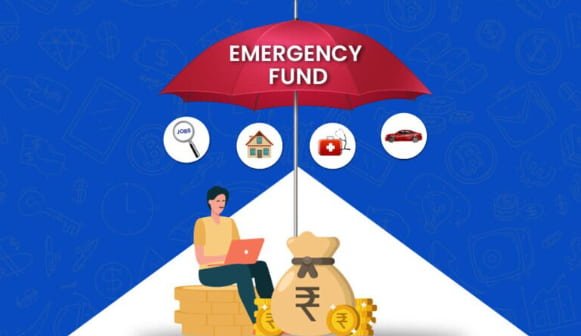
From an Investor’s Eye
Throughout my years of managing financial portfolios and advising on market trends, I have witnessed countless investors fall into the trap of over-allocating into risky assets, only to be forced to sell at a loss when a personal financial emergency arises.
I remember a specific market correction where a client had to liquidate high-growth stocks to cover an unexpected expense because their cash reserves were nonexistent. It was a painful lesson in capital preservation.
Over time, I have learned that the highest-yielding asset is often the peace of mind provided by a properly funded emergency cushion. Once you accept that this cash is an insurance policy rather than an investment vehicle designed for alpha, you can make smarter, more detached decisions about where to park those funds to at least keep pace with current rates.

Investment Strategy: Emergency Funds
The primary objective of an emergency fund for an investor is to provide immediate liquidity and capital preservation without sacrificing the ability to respond to market opportunities.
Rather than viewing cash as a stagnant asset, sophisticated investors treat it as an essential component of their overall risk management framework. During periods of economic uncertainty or heightened market volatility, having a ready supply of cash allows you to navigate life’s unpredictability without derailing your long-term investment trajectory.
Financial planners suggest that keeping three to six months of living expenses in highly liquid instruments is the gold standard for maintaining a balanced approach to your personal balance sheet.
This strategic reserve serves two distinct roles: it acts as a safety net for personal emergencies and as “dry powder” for deploying into the market when valuations become attractive. Many investors fear that holding cash creates a drag on their performance, which is a valid concern in a low-rate world; however, in a high-rate environment, this fear is largely mitigated.
By selecting instruments that provide competitive yields, you can preserve your purchasing power while keeping your capital ready for deployment. This dual-purpose approach transforms your emergency fund from a dead asset into a flexible tool for financial optimization.

Defining Liquidity and Market Volatility
Liquidity refers to the ease with which an asset can be converted into cash without affecting its market price, which is critical during periods of high market volatility.
For an investor, the definition of an emergency fund must prioritize instant or near-instant access, meaning that assets tied up in volatile instruments like individual stocks or corporate bonds are inherently unsuitable. The goal is to avoid the scenario where you must sell your long-term holdings during a market dip just to pay for an unforeseen expense.
Financial advisors often emphasize that true liquidity is defined by the stability of the asset’s price regardless of what the broader stock market is doing on any given day.
The Psychology of Holding Cash
The psychological resistance to holding cash is driven by the fear of missing out (FOMO) on market gains, but this must be balanced against the necessity of financial security.
It is completely normal for an investor to feel frustrated when cash earns less than the broad market indices during bull runs. However, managing this emotional response is a key differentiator between successful long-term wealth builders and those who get caught in cycles of speculation.
Experts observe that the most disciplined investors view their cash holdings as a vital strategic asset rather than an opportunity cost, recognizing that the emotional cost of a forced liquidation far outweighs the potential returns of additional capital deployment.

High-Rate Environment: Where to Park Cash
In a high-interest-rate environment, investors should prioritize instruments like T-Bills, Money Market Funds, and HYSAs, which offer yields that significantly reduce the real-rate opportunity cost of holding cash.
The current economic landscape, influenced by Federal Reserve policy and shifting yield curves, provides a unique opportunity for investors to earn meaningful returns on safe, liquid assets. No longer are investors forced to choose between safety and yield; instead, they can optimize their cash buffer to generate passive income while maintaining the high degree of safety required for an emergency fund.
This environment rewards those who actively manage their cash positions rather than leaving them in traditional checking accounts that pay negligible interest.
Short-term debt instruments are particularly attractive in the current climate, as they offer yields that often exceed inflation, effectively preserving your purchasing power. Many investors are now utilizing a tiered approach, where they keep a portion of their emergency funds in highly liquid accounts and a portion in slightly less liquid but higher-yielding instruments.
This strategy provides the necessary flexibility to handle immediate needs while maximizing the interest earned on funds that are not needed for the short term. It is a tactical approach that aligns well with the broader goals of a comprehensive wealth management strategy.

Analyzing T-Bills and Short-Term Debt
Treasury Bills (T-Bills) represent the pinnacle of capital preservation and safety, backed by the full faith and credit of the government, making them ideal for the most risk-averse portion of an emergency fund.
These instruments allow investors to lock in yields for periods ranging from a few weeks to a year, providing a predictable return that is often exempt from state and local taxes. For investors in high-tax jurisdictions, this tax advantage significantly boosts the after-tax yield compared to traditional savings accounts.
Financial experts often note that the primary appeal of T-Bills is their lack of credit risk, as they are considered the safest financial instrument available to the individual investor.
The secondary market for T-Bills is highly active, providing liquidity if you need to sell your position before the maturity date, although you should be aware of potential price fluctuations. However, for an emergency fund, it is generally recommended to hold these instruments until maturity to avoid any need to sell at a discount.
By laddering your T-Bill purchases—buying bills with different maturity dates—you can create a rolling stream of liquidity that matches your expected needs while consistently capturing prevailing market interest rates. This structured approach is highly effective for sophisticated investors seeking to optimize their cash positions.

Comparing Money Market Funds and HYSAs
While High-Yield Savings Accounts (HYSAs) provide FDIC insurance and simplicity, Money Market Funds often offer higher yields and greater investment flexibility within a brokerage framework.
The choice between these two vehicles depends largely on your need for convenience versus your desire for yield optimization. HYSAs are ideal for those who prefer an “all-in-one” banking experience with immediate access, whereas Money Market Funds are better suited for investors who want to integrate their cash management directly into their broader investment platform.
Many investors choose to utilize both, keeping a smaller portion in an HYSA for instant needs and a larger portion in a Money Market Fund to capitalize on current rates.
To assist in your decision-making, the following table compares the key features of these two popular cash management tools, highlighting their relative strengths in a high-rate environment:
| Feature | High-Yield Savings Account (HYSA) | Money Market Fund |
| Safety | FDIC Insured (Up to limits) | SIPC Protected (Not FDIC insured) |
| Yield Potential | Competitive, changes with bank policy | Highly competitive, tracks fed rates |
| Liquidity | Very High (Instant access) | High (T+1 settlement usually) |
| Best Use Case | Immediate day-to-day emergencies | Strategic cash buffer and opportunity fund |

Optimization: Balancing Risk and Liquidity
The key to optimizing an emergency fund lies in dynamic adjustment, where the size and placement of the fund are regularly recalibrated based on your changing financial obligations and market conditions.
Determining the “right” amount of cash is not a static calculation; it should evolve as your career progresses, your family responsibilities change, and your investment portfolio matures. Experts suggest that a young professional with stable income might require a smaller buffer than a business owner with fluctuating revenue streams.
By periodically reviewing your personal financial risk profile, you can ensure that your cash reserves remain adequate without becoming excessive, which could otherwise hinder your long-term compounding potential.
Holding an excessive amount of cash for an extended period can lead to significant opportunity cost, as these funds miss out on the long-term growth potential of equities. While inflation may currently be tempered by higher savings rates, there is no guarantee this relationship will persist indefinitely.

Inflation and Purchasing Power
Inflation poses a long-term threat to cash holdings, making it essential to prioritize instruments that offer yields closely tracking or exceeding the core inflation rate.
While cash provides security, its real value can decline when the cost of goods and services rises faster than the interest earned on your holdings. This is a critical consideration for investors, as it highlights the importance of maintaining only as much cash as is strictly necessary for your safety net.
Beyond that, capital should ideally be working in instruments that have the potential to appreciate, such as equities or inflation-protected securities, to ensure the preservation of your long-term purchasing power.
Frequently Asked Questions (FAQ)
Why should investors hold cash when markets are performing well?
Holding cash is not about market timing; it is about risk management. Even during strong market performances, personal financial emergencies can occur.
How does a high-interest-rate environment affect my emergency fund strategy?
A high-interest-rate environment is favorable for emergency funds, as it allows you to earn a meaningful yield on your cash reserves. This reduces the opportunity cost of holding cash compared to a low-rate environment.
What is the difference between an emergency fund and an opportunity fund?
While both serve as cash reserves, they have different purposes. An emergency fund is strictly for personal financial safety (e.g., job loss, medical issues) and must be kept in the safest, most liquid instruments.