

Editor’s Comment: Options trading basics for income generation fundamentally rely on the covered call strategy, where an investor holds 100 shares of a stock and sells a call option against them to collect an immediate cash premium.
To successfully navigate the broader US stock market, relying solely on capital appreciation and standard dividend yields is often considered insufficient by seasoned financial analysts. By integrating covered calls into your core investment methodology, you can actively lower your overall cost basis and potentially cushion your portfolio against periods of high market volatility or sideways trading.
This comprehensive guide strips away the complex Wall Street jargon to provide a clear, evidence-based roadmap for understanding strike prices, expiration dates, and premium collection. Let us explore how you can strategically leverage your existing stock holdings to create a more resilient and cash-flow-positive investment engine.

Investors’ Experiences
Many individual investors feel intense anxiety when first approaching the derivatives market, fearing they might wipe out their hard-earned portfolio, and this feeling of overwhelming apprehension is completely normal. Transitioning from simple stock buying to actively managing options contracts can feel intimidating.
However, when executed carefully on high-quality US equities, this strategy acts much like renting out a property you already own, generating a steady stream of passive income while you maintain your core market positions.
Options Trading Basics: The Mechanics of It
The foundational mechanic of a covered call requires you to own 100 shares of an underlying asset, against which you sell one call option contract, granting the buyer the right to purchase your shares at a predetermined strike price.
When you sell this contract, you immediately receive a non-refundable cash premium directly into your brokerage account, which is yours to keep regardless of how the stock performs.
Financial experts observe that this upfront payment provides a tangible, immediate return on investment, slightly reducing the portfolio’s overall volatility. It is a conservative entry point into options trading basics, heavily utilized by institutional portfolio managers to generate yield in flat or slightly bullish market conditions.
The true beauty of this strategy lies in its inherent risk mitigation profile compared to “naked” option selling, which exposes the seller to theoretically unlimited losses. Because you already own the underlying shares of stock, you are completely “covered” if the stock price suddenly skyrockets; your maximum obligation is simply to deliver the shares you already hold at the agreed-upon strike price.
Premium Income and Yield Generation
While this caps your maximum potential upside, it is generally considered a highly acceptable trade-off for the guaranteed premium income received upfront. Market data suggests that for investors focused on consistent cash flow rather than aggressive speculation, this capped upside is a feature, not a bug, of disciplined wealth management.
Understanding the timeline is also crucial, as every options contract comes with a strict expiration date, creating a natural cycle of evaluation and execution for the investor. As time passes, the extrinsic value of the option decays—a concept known as theta decay—which mathematically works in favor of the option seller.
If the stock closes below the strike price on expiration Friday, the contract expires worthless, and you retain both your shares and the initial premium. You are then completely free to write another covered call the very next week or month, creating a compounding cycle of yield generation that can significantly boost your annualized returns over a multi-year horizon.

Strategic Asset Selection for Call Options
Selecting the right underlying asset is critical for options trading basics, with financial analysts generally recommending highly liquid, fundamentally sound blue-chip stocks or broad-market ETFs rather than highly volatile, speculative companies.
For instance, writing options on stable dividend-growers or established tech giants like Intel or AMD provides a predictable trading range, minimizing the risk of extreme downward gaps.
When an investor chooses companies with strong balance sheets and consistent earnings histories, the underlying asset continues to hold intrinsic long-term value even if a short-term market correction occurs.
This dual-layered approach—combining fundamental stock picking with derivative income—is widely observed to be a robust method for surviving unpredictable macroeconomic shifts and inflation.
ETFs and US Equities in Options
Alternatively, many investors utilize broad Exchange Traded Funds (ETFs), such as those tracking the S&P 500 or dividend-focused indices, to execute their covered call strategies with inherently lower single-stock risk.
By writing calls on a diversified basket of stocks, you are effectively trading slightly lower option premiums for significantly higher sleep-at-night security, avoiding the massive price swings associated with individual corporate earnings reports.
Institutional data consistently highlights that maintaining a portfolio of high-quality US equities while systematically selling out-of-the-money calls can potentially outperform standard buy-and-hold strategies during prolonged periods of market consolidation.
Risk Management in Options Trading Basics
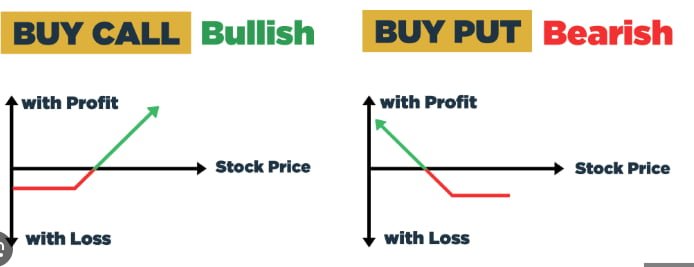
While covered calls are generally considered a conservative derivative strategy, the primary risk lies in the potential depreciation of the underlying stock price, which the collected premium can only partially offset. It is a common misconception that options eliminate market risk; if you purchase 100 shares of a company and its valuation plummets due to poor financial results, you still bear the burden of that capital loss.
However, the options premium you collected when selling the call acts as a financial buffer, effectively lowering your breakeven point on the stock position. Risk management experts advise that you should only write calls on stocks you are completely comfortable holding in your portfolio for the next several years.
Another significant element of risk management involves understanding opportunity cost, which occurs when the underlying stock price aggressively surges past your chosen strike price. If a major positive catalyst causes your shares to rocket upward, your gains are strictly capped at the strike price, and you will miss out on any further upside capital appreciation.
For many aggressive growth investors, watching a stock climb 20% while their gains are capped at 5% can be psychologically frustrating. Therefore, mastering options trading basics requires a distinct mindset shift: you must learn to be completely satisfied with achieving your predetermined target yield, rather than constantly chasing maximum theoretical market returns.

Calculating Premium Income vs. Capital Appreciation
To evaluate the true effectiveness of a covered call, investors must mathematically compare the immediate premium income against the sacrificed potential for long-term capital appreciation. When you sell an out-of-the-money option, you are intentionally leaving a small buffer for the stock to grow before your shares are called away, capturing both a stock price increase and the option cash.
Financial modelers suggest calculating the “static return” (if the stock stays flat) and the “if-called return” (if the stock reaches the strike price) to accurately assess the trade. This analytical framework ensures that the absolute maximum profit potential adequately compensates the investor for the capital risk assumed by holding the underlying shares.
A common strategic error among beginners learning options trading basics is aggressively chasing the highest possible yields by selling at-the-money or in-the-money calls on highly volatile tech stocks.
While the immediate cash payout is undeniably massive, this approach almost guarantees the shares will be called away, completely eliminating any chance of building long-term wealth through compound interest and share price growth.
Experts recommend aiming for a balanced delta—typically around 0.30—which historically provides a solid, respectable passive income stream while allowing the underlying US stock a realistic runway to appreciate naturally over the course of the contract’s lifespan.

Executing Options Trading Basics: Step-by-Step
Executing a successful covered call strategy requires a disciplined, systematic approach, starting with the acquisition of 100 shares and ending with the careful monitoring of the contract’s expiration date.
The modern brokerage interface has made this mechanical process incredibly straightforward, often allowing investors to execute a “buy-write” order, which simultaneously purchases the stock and sells the call option in one single transaction.
This efficiency ensures you lock in the exact options premium you desire without being exposed to intraday market slippage. Before executing, it is highly recommended to verify your brokerage account permissions, as trading financial derivatives typically requires an elevated approval level compared to standard equity purchasing.
Once the trade is live, the investor enters the management phase, where they must actively monitor the position. During this critical period, financial advisors observe that traders typically choose from three primary management actions:
- Letting it expire: Doing nothing and keeping the premium if the stock remains below the strike.
- Closing early: Buying back the contract to secure a partial profit and free up the shares.
- Rolling the option: Buying back the near-term contract and simultaneously selling a new one with a later expiration date.This advanced portfolio management maneuver allows the investor to collect an additional net credit while extending their participation in the stock’s momentum.
Strategic Steps and Actions Detailed Table
To visually summarize the strategic decision-making process, the following structured table outlines the critical steps and expected outcomes when managing your US stock options positions.
Utilizing a clear framework like this helps remove emotional bias from your trading routine, ensuring that your wealth management strategy remains strictly data-driven and objective:
| Strategic Step | Action Required | Expected Outcome |
| Asset Acquisition | Purchase exactly 100 shares of a highly liquid US stock or ETF. | Establishes the required collateral base for the options contract. |
| Strike Selection | Choose an out-of-the-money strike price based on technical analysis. | Balances desired premium income with room for capital appreciation. |
| Contract Execution | Sell to open (STO) one call option contract to collect the premium. | Immediate cash is deposited directly into the brokerage account. |
| Position Management | Monitor the stock price relative to the strike as expiration approaches. | Determine whether to let expire, close early, or roll the contract. |
Frequently Asked Questions (FAQ)
Do I permanently lose my stock if the covered call expires exactly at the strike price?
No, if the underlying stock price closes exactly at or below the strike price on the specified expiration date, the option contract will expire completely worthless.
Can I execute a covered call strategy inside a standard retirement account like an IRA?
Yes, the vast majority of major US brokerages fully permit the execution of covered calls within self-directed retirement accounts, such as IRAs or Roth IRAs.
What happens if the stock price drops significantly after I sell the call option?
If the US stock experiences a severe downturn, the call option you sold will lose its value rapidly, which is actually a positive outcome for the short side of the trade.
You will keep the entire upfront premium income, which acts as a small financial cushion to partially offset the unrealized capital loss on your stock shares.