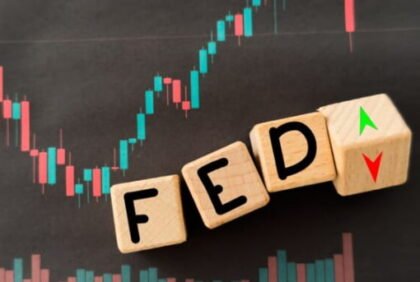

Editor’s Opinion: A Strong USD generally exerts downward pressure on the earnings of U.S. Multinational Corporations with significant foreign revenue, while a Weak USD acts as a tailwind by making exports cheaper and foreign earnings more valuable when converted back into dollars.
Watching your portfolio’s value fluctuate not because of the underlying company’s performance, but due to shifting exchange rates, can be one of the most frustrating experiences for an investor. It is completely normal for new and seasoned investors alike to feel a sense of unease when global currency markets seem to swing against their positions.

In my own journey through the markets, I have learned that while you cannot control the Federal Reserve’s interest rate decisions or global geopolitical shifts, you can certainly prepare your portfolio to weather these tides. Understanding these dynamics transforms fear into a strategic advantage, allowing you to view currency fluctuations as factors to manage rather than random events to endure.
Introduction to Global Currency Dynamics
The global financial system operates on the pulse of currency fluctuations, where the value of the U.S. Dollar acts as a primary barometer for investor sentiment and international trade health. Whether the dollar is strengthening or weakening, these movements ripple through asset classes, altering the competitive landscape for businesses and the purchasing power of global consumers.
Investors often fixate on stock prices, yet the underlying currency environment remains a silent, dominant force shaping real returns.
This intricate dance of values is rarely accidental; it is driven by a complex interplay of interest rate differentials, economic growth prospects, and safe-haven demand. When you hold a global portfolio, you are inherently exposed to these movements, making it essential to grasp how a Strong USD or a Weak USD environment alters the risk-reward profile of your holdings.
By decoding these signals, you can align your investment thesis with the prevailing macroeconomic currents.

Currency Markets: Strong USD vs. Weak USD
The relative strength of the U.S. Dollar is primarily driven by the Federal Reserve’s monetary policy, specifically interest rate cycles, alongside global investor demand for safe-haven assets. A Strong USD occurs when the dollar appreciates against a basket of foreign currencies, usually due to higher relative yields in the U.S., whereas a Weak USD typically emerges when global growth improves or the Fed adopts a more accommodative stance.
Understanding these mechanics is fundamental to anticipating how your stocks might react to broader market conditions.
The creation of a Strong USD environment often stems from a “flight to quality,” where investors flock to dollar-denominated assets during times of global uncertainty, or when the Federal Reserve keeps interest rates higher than other central banks. This high-yield environment attracts foreign capital, further driving up demand for the dollar.
Conversely, when economic conditions stabilize or improve globally, investors often reallocate capital to higher-growth international markets, reducing demand for the dollar and leading to a Weak USD.
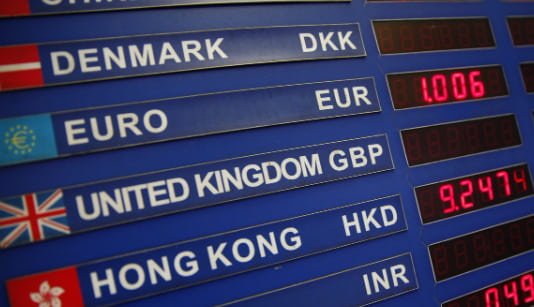
Effects of a Strong USD Environment
In a Strong USD environment, domestic investors often see diminished returns from international holdings, and U.S.-based companies with global operations face headwinds due to the currency translation effect. This scenario frequently creates a drag on the reported earnings of Multinational Corporations, as revenue generated in foreign currencies becomes worth less when translated back into the more expensive dollar.
Effects of a Weak USD Environment
A Weak USD typically serves as a catalyst for growth in Emerging Markets and boosts the earnings of U.S. Multinational Corporations by increasing the value of their foreign-denominated revenue. This environment often encourages foreign investment into U.S. markets while making American exports more competitively priced, thereby stimulating domestic production and potentially enhancing profitability for export-oriented firms.
When the dollar loses value, the “translation boost” allows companies to report higher earnings simply through currency conversion, even if underlying demand remains flat. Furthermore, this environment often eases the burden on emerging nations that carry significant dollar-denominated debt, leading to more stable economic conditions in those regions.
Investors often find that their global equity exposure performs better in weak-dollar cycles, providing a diversified cushion that complements a domestic equity strategy.
Impact on Global Portfolios and Equities
Currency movements act as a multiplier for portfolio returns, meaning a stellar stock pick can be undermined by a negative currency trend, or conversely, a mediocre asset can be buoyed by a favorable exchange rate shift. The correlation between the USD and equities is rarely linear; it shifts based on sector exposure, geographic diversification, and the specific sensitivity of a company’s supply chain to foreign costs.
Investors must recognize that their “home bias”—the tendency to invest primarily in domestic stocks—often leaves them underexposed to the currency hedging benefits of truly global diversification.
Managing a global portfolio requires an understanding that equities are not priced in a vacuum; they are priced in local currencies that interact with the dollar in real-time. When you invest in foreign markets, you are essentially making two bets: one on the company’s ability to generate cash flow, and another on the direction of that country’s currency relative to the dollar.
Macroeconomic Policy and Geographic Diversification
Failure to account for the second bet can result in significant “currency risk,” where your gains are eroded by the very volatility you sought to escape through diversification.
Lastly, institutional data suggests that long-term portfolios that ignore currency risks often experience higher volatility than those that actively integrate macroeconomic policy analysis into their allocation strategies. It is observed by financial experts that during periods of extreme dollar volatility, companies with high levels of geographic diversification tend to show more resilient earnings.
By incorporating these insights, you can move away from reactive portfolio management and toward a proactive stance that accounts for the currency environment.

Multinational Earnings and Revenue Translation
Multinational Corporations (MNCs) are the frontline battleground for currency risk, as they must navigate the complexities of converting diverse revenue streams into a single reporting currency. When the dollar fluctuates, these companies often report volatility in their quarterly earnings reports, not because of operational failures, but because of the mathematical impact of currency translation on their international balance sheets.
Investors should pay close attention to the geographic revenue mix listed in annual reports, as it reveals the company’s sensitivity to the dollar. A company generating 60% of its income in Europe and Asia will be significantly more impacted by a Strong USD than a company with primarily domestic revenue.
Smart investors analyze these “currency headwinds” or “tailwinds” to determine if a stock’s price drop is justified by actual performance or merely a temporary accounting effect driven by exchange rates.

Emerging Markets and Dollar-Denominated Debt
The relationship between a Strong USD and Emerging Markets is often antagonistic, as a rising dollar makes it exponentially more difficult for these nations and their corporations to service dollar-denominated debt.
When the dollar strengthens, the cost to repay principal and interest on this debt rises in local currency terms, often triggering liquidity crises or forcing austerity measures that stifle economic growth.
Conversely, a Weak USD provides “breathing room” for these economies, allowing for capital expansion and higher corporate profitability within the region. Investors seeking exposure to emerging markets must therefore monitor the dollar’s strength as a proxy for the creditworthiness and growth potential of the region.
A portfolio heavy in emerging markets during a period of dollar appreciation is effectively taking on a high-risk currency bet, which requires careful position sizing and risk management.
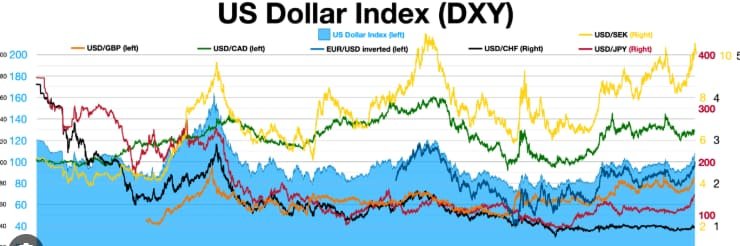
Strategic Allocation in Currency Environments
Strategic asset allocation during currency volatility involves shifting the portfolio mix toward assets that are either naturally hedged or structurally resilient to exchange rate fluctuations. Rather than attempting to “time the market” by predicting short-term currency moves, successful investors often employ a “core-satellite” approach, maintaining core holdings that are dollar-neutral while using satellite positions to capture trends in specific currencies or foreign markets.

Hedging Strategies for Investors
Investors looking to mitigate the impact of currency fluctuations can utilize currency-hedged ETFs, which neutralize the currency effect by using derivatives to lock in exchange rates. This allows the investor to capture the performance of the underlying foreign equity market without the added “bet” on the strength or weakness of the local currency versus the U.S. Dollar.
These instruments are particularly useful for those who believe in the growth potential of a specific country but are wary of its currency volatility. Another approach involves holding a portion of assets in commodities, such as gold, which has historically acted as a store of value when the dollar weakens.
While hedging adds a layer of management complexity, it is a powerful tool for reducing portfolio variance and protecting capital during periods of aggressive dollar appreciation or depreciation.
Comparison of Currency Impacts
| Feature | Strong USD | Weak USD |
| U.S. Exports | More Expensive (Less Competitive) | Cheaper (More Competitive) |
| Multinational Earnings | Lowered by Translation | Boosted by Translation |
| Emerging Markets | High Pressure (Debt Servicing) | Favorable (Capital Inflow) |
| Imported Goods | Cheaper for U.S. Consumers | More Expensive for U.S. Consumers |
| Typical Fed Policy | Tightening / High Interest Rates | Accommodative / Low Interest Rates |
Frequently Asked Questions (FAQ)
Does a strong dollar always mean the stock market will drop?
Not necessarily. While a Strong USD can hurt multinational earnings, it can also reflect a strong U.S. economy, which may drive domestic demand and boost stocks in sectors like retail and domestic services.
How can I protect my portfolio from currency risk without complex hedging?
The simplest way to manage currency fluctuations is to maintain a diversified portfolio that includes companies with varied geographic revenue mixes. You do not need complex derivatives to hedge; owning high-quality, domestic-focused companies alongside global giants provides a natural balance.
Are gold and commodities effective hedges against a weak USD?
Yes, historically, commodities like gold tend to perform well when the U.S. Dollar weakens, as the dollar’s loss of purchasing power increases the price of these assets. They can serve as a non-correlated asset to complement your equity holdings.
How do I find out how much of my company’s revenue is international?
You can usually find this information in the “Management Discussion and Analysis” section of a company’s 10-K (Annual Report). It will often break down revenue by geographic region, allowing you to assess your exposure to foreign exchange risk.