

Editor’s Note: Managing currency risk involves deploying strategic asset allocation and specialized hedging tools to actively protect global investment portfolios from unpredictable, sudden fluctuations in exchange rates, particularly between major fiat systems like the USD, EUR, and CAD.
Financial analysts consistently observe that when you invest capital in foreign stock markets, you are fundamentally purchasing both the underlying company’s equity and the native local currency. If your home currency significantly strengthens against the foreign currency during your holding period, your overall investment returns can be drastically reduced.
This mathematical reality makes proactive exchange rate management an absolutely essential, non-negotiable strategy for modern international wealth building. Understanding these mechanics ensures your hard-earned dividends are not silently eroded by shifting macroeconomic tides.
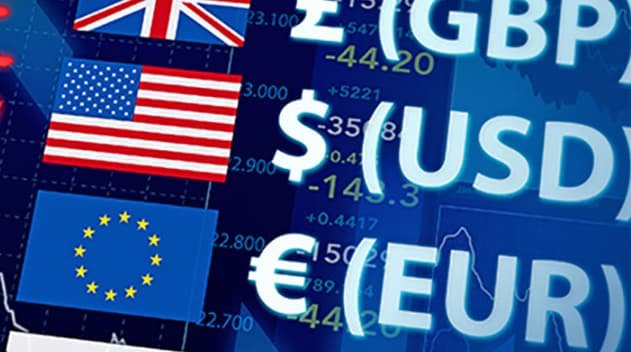
Experiences in Managing Currency Risk
Many investors worry deeply when they see their international stocks performing exceptionally well, only to realize that invisible currency fluctuations have completely wiped out their actual profits; believe me, this frustration is entirely normal and incredibly common.
During my early days of buying European and Canadian dividend stocks, I vividly remember feeling utterly confused and defeated when a solid 10% gain in a foreign stock translated to a net loss in my home brokerage account simply due to a sudden surge in the US Dollar.
I quickly learned that ignoring foreign exchange (Forex) dynamics is essentially like leaving the front door of your portfolio wide open to unpredictable economic storms. By actively understanding these subtle macroeconomic shifts, you can confidently transform wild currency swings from a terrifying hidden threat into a calculated, highly manageable variable.
Exchange Rate and Currency Risk Management
Effectively managing currency risk requires retail investors to constantly monitor the macroeconomic monetary policies of central banks, as differing interest rates between the US, Europe, and Canada directly dictate intense exchange rate volatility.
When the Federal Reserve aggressively raises benchmark interest rates to combat domestic inflation, the US Dollar (USD) typically strengthens rapidly against both the Euro (EUR) and the Canadian Dollar (CAD). For an American investor currently holding European equities, this mathematical shift means the Euro-denominated capital gains are worth significantly less when eventually converted back into dollars.
Conversely, a weakening USD can artificially inflate your international returns, highlighting exactly why seasoned wealth experts highly suggest treating currency exposure as a distinct, highly active component of your overall retirement portfolio strategy.

The underlying structural differences between these three major global currencies further complicate how retail investors must approach their long-term asset allocation. The Euro represents a massive, complex union of diverse sovereign economies, meaning European Central Bank (ECB) policies must delicately balance the conflicting needs of both high-growth and financially struggling member nations.
Canadian Dollar, S&P 500 and EUR
Meanwhile, the Canadian Dollar is widely considered a volatile “commodity currency,” meaning its baseline value remains deeply intertwined with global oil and energy prices. When navigating the S&P 500 versus international indices, recognizing these fundamental economic drivers allows investors to better anticipate shifting currency trends.
To systematically mitigate the unpredictable nature of these fiat currencies, financial advisors heavily emphasize the importance of true geographical and sector diversification. It is generally observed that holding a broad, carefully calculated mix of international assets naturally smooths out extreme currency spikes over a multi-decade investment horizon.
For instance, if the CAD suddenly drops due to plunging oil prices, a globally diversified portfolio might simultaneously benefit from a strengthening USD or EUR in other industrial sectors. Ultimately, relying entirely on one single fiat currency unnecessarily exposes your life savings to massive geopolitical risks, making a well-balanced approach vital for sustained wealth management.

Hedging Strategies: Tactical Tools for International Investors
Investors actively managing currency risk frequently utilize currency-hedged Exchange-Traded Funds (ETFs) to automatically neutralize the negative impact of fluctuating exchange rates on their international stock returns.
These specialized financial instruments strategically use institutional forward contracts to lock in a specific exchange rate, ensuring that the ETF’s performance strictly mirrors the underlying foreign stock market without the added chaotic noise of forex movements.
Wealth managers frequently recommend these tools for investors who desperately want direct exposure to European or Canadian equities but hold a strong, data-driven conviction that their home currency will continue to appreciate. Key considerations when utilizing these tools include:
- Expense Ratios: Hedged funds typically charge slightly higher annual management fees.
- Tax Implications: Frequent derivative trading within the fund can trigger capital gains.
- Market Timing: Hedging is most effective during periods of extreme, rapid currency divergence.

Hedging Strategies and Investment Vehicles
However, it is absolutely crucial to recognize that implementing these advanced hedging strategies is never entirely free, and the associated hidden costs can sometimes severely erode long-term compounding interest. Experts frequently point out that over very long investing horizons—typically spanning two or three decades—extreme currency fluctuations historically tend to revert to the mean.
This natural macroeconomic balancing act often makes the extra cost of continuous hedging mathematically unnecessary for patient, buy-and-hold retail investors. Therefore, clearly understanding your specific time horizon and emotional risk tolerance is absolutely essential before committing substantial capital to heavily hedged investment vehicles.
Portfolio Diversification and Managing Currency Risk
Strategic portfolio diversification across multiple distinct currency zones acts as a natural, built-in financial shock absorber, spreading your capital across varied economic cycles to minimize localized catastrophes.
By deliberately holding high-quality assets denominated in USD, EUR, and CAD, intelligent investors actively prevent a single central bank’s monetary policy mistake from permanently derailing their entire retirement plan.
Financial researchers consistently observe that this multi-currency approach significantly improves a portfolio’s overall risk-adjusted returns, as different geographic regions rarely experience severe economic recessions or hyperinflation at the exact same moment.
This strategic geographic spread is widely considered the ultimate defensive playbook for modern, globally-minded retail investors seeking absolute financial stability.

Asset Allocation and International Portfolios
When constructing a truly robust international portfolio, comparing the distinct economic drivers behind these fiat currencies helps clearly dictate where your capital should be optimally deployed. The US market consistently offers unmatched technological innovation, Europe provides highly stable, dividend-paying industrial conglomerates, and Canada excels globally in natural resources and stable banking sectors.
Integrating these unique regional strengths requires a highly calculated approach to sophisticated asset location. By understanding how these regions react to stress, you can insulate your wealth from severe market drawdowns.
Currency Zone and Portfolio Roles Table
To visually grasp how these distinct fiat systems interact within a diversified brokerage account, we must analyze their historical reactions to massive macroeconomic stress. The US Dollar is widely recognized as a definitive safe haven, typically surging aggressively when global panic sets in.
The Euro is heavily reliant on industrial output, making it highly sensitive to global supply chain disruptions. The Canadian Dollar, tied deeply to physical commodities, offers excellent portfolio protection when global inflation rapidly drives up oil prices.
| Currency Zone | Primary Economic Driver | Typical Behavior in Market Crises | Strategic Portfolio Role |
| US Dollar (USD) | Technology & Consumer Spending | Acts as a global safe haven; usually appreciates rapidly. | Core growth engine and primary defensive anchor. |
| Euro (EUR) | Industrials & Luxury Goods | Highly sensitive to global trade and volatile energy costs. | Deep value investing and reliable dividend yield generation. |
| Canadian Dollar (CAD) | Commodities (Oil, Minerals) | Often depreciates during severe global economic recessions. | Tangible resource exposure and natural inflation protection. |

Safe Haven Assets: USD Dominance in Global Markets
During periods of extreme geopolitical uncertainty, the US Dollar completely solidifies its status as the world’s primary safe haven asset, causing a massive influx of foreign capital that dramatically shifts currency valuations.
When terrifying global conflicts erupt or severe pandemics suddenly halt international trade, massive institutional investors instinctively liquidate their riskier emerging market assets and rush to safely purchase US Treasury bonds. This immense, panic-driven demand naturally drives up the foundational value of the USD against both the EUR and CAD almost instantaneously.
For international investors, recognizing this predictable behavioral pattern is absolutely critical when managing currency risk, as a sudden dollar spike can severely impact the valuation of unhedged foreign stock portfolios literally overnight.
Currency Exposure and Financial Planning
Furthermore, multinational corporations cleverly utilize their own massive internal mechanisms to aggressively combat these unpredictable exchange rate fluctuations without relying entirely on expensive Wall Street derivatives.
Massive blue-chip companies spanning across the US, Europe, and Canada naturally hedge their corporate currency exposure by strategically manufacturing goods and sourcing local materials in the exact same economic regions where they generate their revenue.
Analysts highly suggest that by heavily investing in these diversified, globally integrated conglomerates, retail investors can passively benefit from institutional-level risk management, adding a highly effective layer of protection to their financial planning.

FAQ on Managing Currency Risk Effectively
How exactly does a strong US Dollar impact my investments in European and Canadian stock markets?
When the USD significantly strengthens, your unhedged foreign investments essentially lose real value when they are mathematically translated back into your home currency. For a practical example, if a Canadian stock gains a solid 5% in value, but the CAD drops 5% against the USD during that exact same period, your net return as a US-based investor is practically zero.
Top financial experts continually observe that consistently managing currency risk by monitoring these shifting exchange rates helps actively prevent these intensely frustrating scenarios, ensuring that your international equity gains are not silently erased by unfavorable, invisible macroeconomic currency trends over time.
Should a beginner investor use currency-hedged ETFs to completely eliminate forex volatility?
While heavily hedged ETFs sound like an absolutely perfect solution on paper, most conservative financial advisors suggest that retail investors with a very long time horizon (15+ years) do not necessarily need them. Standard, unhedged ETFs are generally much cheaper to own, and over multiple decades, random currency fluctuations historically tend to balance themselves out completely.
However, if you are rapidly nearing retirement and absolutely cannot tolerate sudden market volatility, intelligently incorporating a few hedged investment vehicles into your portfolio can provide essential, psychological peace of mind and stabilize your immediate cash withdrawal rates across the USD, EUR, and CAD economic zones.

What is the most actionable, everyday strategy for managing currency risk without paying high fees?
The most organic, efficient, and cost-effective method is to fully embrace true global diversification by holding a broad mix of high-quality assets natively priced in different fiat systems. By intentionally purchasing a perfectly balanced mix of US technology firms, European dividend aristocrats, and Canadian energy titans, you naturally create a highly self-insulating, bulletproof wealth ecosystem.
Taking ultimate control of your financial independence means fully accepting that currency waves will always organically rise and fall. Instead of fearing the macroeconomic tide, review your current asset allocation today, ensure you are genuinely globally diversified, and let the long-term compounding mechanics of the worldwide stock market work tirelessly in your favor.