Investor Note: How U.S. elections and political shifts impact the global stock market is primarily through short-term market volatility and rapid sector-specific realignments based on anticipated legislative changes, though long-term international market trajectories generally remain tied to broader economic fundamentals rather than isolated partisan outcomes.
Understanding exactly how U.S. elections and political shifts impact international finance is a critical exercise for anyone looking to optimize their wealth-building strategies. Every four years, the world watches the United States, knowing that a change in leadership often brings a massive shift in fiscal policy, regulatory frameworks and foreign trade agreements.
It is commonly noted by financial historians that these pivotal moments create waves of uncertainty that temporarily destabilize global equities. Instead of viewing these periods strictly as risky hurdles, proactive market participants often observe them as unique windows for strategic repositioning. By focusing on fundamental data rather than media sensationalism, individuals can better align their asset allocation with long-term macroeconomic growth objectives.
Investors’ Experience
When tracking the financial landscape, I have noticed that the sheer volume of news during a campaign season can easily overwhelm even seasoned portfolio managers. It is frequently observed that the anticipation of a new administration causes sudden ripples across international exchanges. Many investors worry about this impending volatility, fearing sudden drops in their hard-earned portfolios, and this emotional reaction is completely normal and widely recognized by behavioral economists.
However, looking at the broader picture reveals that political transitions are usually temporary catalysts rather than permanent structural market breakers. By stepping back and viewing these events through the lens of historical data, we can identify unique opportunities hidden within the temporary noise of aggressive campaign rhetoric.

Historical Market Trends: U.S. Elections
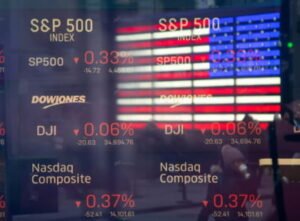
Looking back at decades of financial history, experts suggest that election years consistently introduce a noticeable spike in market volatility, particularly during the crucial months leading up to November. The VIX, commonly known as the fear index, often climbs as institutional funds hedge their bets against potential legislative overhauls. It is generally observed that markets detest uncertainty; thus, when two starkly different economic visions clash, institutional investors tend to adopt a holding pattern.
However, once the ballots are cast and the outcome is finalized, a relief rally frequently follows, regardless of which political party claims victory. This historical rhythm highlights that the anxiety of the unknown is often more disruptive than the actual policy changes implemented.
The phenomenon of the presidential election cycle theory further illuminates the relationship between governance and financial performance over a standard four-year term. Research typically indicates that the third year of a presidential term historically yields the strongest returns for broad market indices like the S&P 500, as administrations push for economic stimulus to secure re-election. Conversely, the first year often involves navigating the immediate fallout of new regulatory agendas or structural reforms.
These cyclic patterns are not absolute guarantees, but they offer a valuable compass for those managing a global portfolio. Understanding these historically documented tendencies helps demystify the seemingly chaotic price actions that frequently dominate the financial headlines.
U.S. Political Landscape and Financial Markets
Beyond domestic borders, international exchanges are intricately tied to the perceived stability of the U.S. political landscape, making foreign assets highly responsive to Washington’s shifting moods. When an administration signals a move toward protectionism or aggressive trade renegotiations, emerging markets typically experience immediate liquidity constraints and currency devaluations. Alternatively, platforms advocating for open global trade often catalyze bullish momentum in export-heavy economies across Asia and Europe.
Financial analysts often point out that tracking the correlation between U.S. political rhetoric and the performance of international exchange-traded funds (ETFs) is crucial. Recognizing these interconnected global ripples allows for a more resilient and geographically diversified approach to capital preservation.

Sector Rotations: Policy Changes and Industry Shifts
As campaign promises crystalize into formal policy platforms, sector rotation becomes a dominant strategy among proactive market participants aiming to capture anticipated growth. Different political ideologies naturally favor distinct segments of the economy, leading to significant capital reallocation. For instance, a platform prioritizing domestic infrastructure and defense spending usually triggers a rally in industrial and aerospace equities.
Conversely, an administration focused on combating climate change often acts as a massive catalyst for the renewable energy sector and electric vehicle supply chains. To navigate these rotations effectively, many seasoned analysts look closely at the underlying legislative proposals rather than getting swept up in the broad, generalized market sentiment.
Anticipating these targeted industry shifts requires a nuanced understanding of how regulatory environments dictate corporate profitability across varying sectors.

Healthcare Regulations and Financial Deregulations
When evaluating the potential impact of an incoming administration, it is widely suggested by wealth managers to consider these key areas of legislative divergence:
- Healthcare Regulations: Potential changes to drug pricing or insurance mandates heavily influence pharmaceutical and biotech valuations.
- Financial Deregulation: Easing banking compliance laws often boosts the operational margins of major regional and global financial institutions.
- Energy Infrastructure: The pivot between fossil fuel subsidies and green energy credits drastically alters the long-term trajectory of the energy sector.By strategically aligning specific asset classes with these anticipated legislative pivots, it becomes possible to capture upside momentum while mitigating risks.
International Trade Policies: Tariffs and Global Market Ripples
The overarching stance a U.S. administration takes on international trade serves as a primary driver for the health of the global supply chain and multinational corporate earnings. When political rhetoric leans toward imposing heavy tariffs or renegotiating long-standing trade agreements, manufacturing hubs heavily reliant on American consumers often face immediate equity contractions.
It is frequently observed that multinational corporations with extensive overseas operations suffer from compressed profit margins due to increased import costs and retaliatory tariffs. These geopolitical maneuvers create a complex web of economic consequences, where a single policy shift in Washington can temporarily disrupt the operational efficiency of tech hardware manufacturers in Taiwan or automotive assembly lines in Germany.

Conversely, when a political shift signals a return to multilateral trade cooperation and the lowering of cross-border barriers, the global stock market generally responds with immense optimism. Clear and stable trade relations encourage multinational corporations to confidently invest in long-term capital expenditures and international expansions.
Economists often note that predictable trade policies help stabilize currency exchange rates, which inherently lowers the hedging costs for global businesses.
Navigating this environment requires staying informed about the nuances of diplomatic relations and understanding how bilateral agreements impact specific commodities and international equities. .
Fiscal Policy and the Federal Reserve
While elections directly determine the executive branch, their indirect influence on fiscal policy and government spending limits heavily dictates the broader economic environment. Administrations pushing for massive infrastructure bills or comprehensive tax cuts inject significant liquidity into the economy, which historically stimulates short-term corporate earnings and boosts equity valuations.
However, experts consistently warn that this aggressive fiscal expansion often brings the secondary consequence of rising inflation.
When government borrowing accelerates to fund these initiatives, the bond market reacts dynamically, frequently leading to higher yields. Consequently, participants must closely evaluate how proposed spending packages will ultimately influence the national deficit and shape the underlying foundation of domestic and international capital markets.

The relationship between the current political administration and the inherently independent Federal Reserve is a fascinating dynamic that heavily influences the trajectory of interest rates. Although the central bank operates autonomously, the economic climate engineered by political leaders directly forces the Fed to adjust its monetary policy.
If expansive political policies overheat the economy, it is widely observed that the Federal Reserve will step in with rate hikes to cool inflation, directly impacting borrowing costs for global corporations.
Impacts Table of Elections
To better illustrate how different political and economic combinations impact the financial ecosystem, consider the following structured comparison of these distinct environments:
| Economic Environment | Typical Political Action | Likely Federal Reserve Response | Anticipated Stock Market Impact |
| High Inflation | Reduced Government Spending | Increasing Interest Rates | Growth Stocks Underperform, Value Stocks Rise |
| Economic Recession | Aggressive Stimulus Packages | Decreasing Interest Rates | Broad Market Recovery, High Volatility |
| Stable Growth | Neutral Legislative Agenda | Maintaining Current Rates | Steady Bull Market, Low Volatility |
Examining this intersection between fiscal spending and monetary tightening is absolutely essential for understanding the broader macroeconomic indicators driving stock valuations. When borrowing becomes expensive due to Fed rate hikes, heavily leveraged companies, particularly within the fast-growing technology sector, often see their stock prices contract.
Conversely, stable interest rates fostered by balanced political budgeting provide a fertile ground for sustained economic expansion and corporate innovation.
Financial strategists often suggest that maintaining a balanced portfolio, encompassing both dividend-paying value stocks and aggressive growth assets, is the safest way to hedge against these complex fiscal shifts. Ultimately, respecting the delicate balance between political ambition and central bank pragmatism is crucial for long-term success.
Frequently Asked Questions
How quickly does the global stock market react to unexpected U.S. election results?
It is widely observed that unexpected electoral outcomes trigger immediate, knee-jerk reactions across global markets, often resulting in sharp volatility during overnight trading and the subsequent few days.
Because algorithms and institutional funds rapidly adjust to new realities, major indices can experience steep fluctuations as assets are rapidly repriced to reflect anticipated policy shifts.
Are specific international markets more vulnerable to U.S. political changes?
Yes, analysts frequently suggest that emerging markets and export-heavy economies tend to bear the highest level of vulnerability to changes in Washington’s political climate.
Countries heavily reliant on American consumer demand or those holding substantial dollar-denominated debt often experience amplified volatility when U.S. trade policies or interest rates shift.
Should investors drastically alter their long-term strategies during an election year?
Most financial experts strongly agree that completely overhauling a well-constructed, long-term portfolio simply because of an election cycle is a suboptimal strategy.
While it is prudent to recognize and perhaps slightly adjust for anticipated sector rotations, abandoning core investment philosophies based on partisan anxiety generally leads to missed opportunities and unnecessary tax burdens.