
Editor’s Note: When deciding between Coca-Cola (KO) and PepsiCo (PEP), KO provides superior beverage profit margins and pure global brand dominance, whereas PEP offers exceptional revenue diversification and defensive growth through its highly profitable Frito-Lay snack division.
Investor Comments
Many new investors worry about picking the wrong dividend stock when macroeconomic conditions tighten and this anxiety is completely normal. Having watched market cycles wipe out speculative tech gains, I find immense comfort in these two consumer staple giants. While analysts argue over which corporation holds better forward multiples, the real magic lies in how these companies consistently deposit cash into brokerage accounts regardless of inflation.
My personal strategy leans slightly toward the snack diversification of one, but the pure brand equity of the other remains an undeniable force in any wealth-building portfolio.
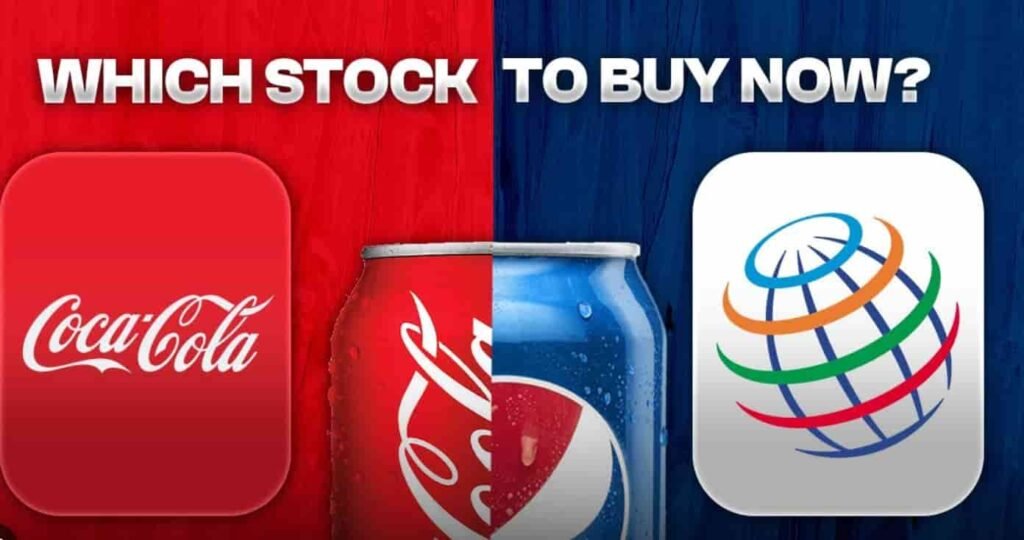
The ongoing debate surrounding Coca-Cola (KO) vs. PepsiCo (PEP) extends far beyond the grocery store aisle and straight into the core of intelligent portfolio management. For decades, these two titans have dominated the consumer staples sector, offering investors a safe harbor during turbulent economic times.
Business Models and Dividend Stocks
Instead of competing purely on price in a saturated market, both companies are creating uncontested market space by acquiring emerging health-conscious brands. Understanding their underlying business models is fundamentally essential for anyone looking to build a resilient, passive income stream.
Deciding which equity to hold can feel incredibly overwhelming for retail investors facing shifting macroeconomic landscapes and rising interest rates. Many investors worry about allocating capital during high inflation, and this is entirely normal. Fortunately, historically speaking, defensive dividend stocks like these have provided highly consistent returns.
Market Dominance and Portfolio Diversity
PepsiCo’s strategic integration of the Frito-Lay snack division provides critical revenue diversification that protects the company against declining global soda consumption. By leaning heavily into its food divisions, the enterprise has effectively insulated itself against shifts in beverage preferences. This dual-engine approach means that even when sugary drink sales slump, consumers continue to purchase snack foods at a highly predictable rate.
Consequently, financial experts consistently highlight this balanced portfolio as a prime example of structural resilience within the broader consumer goods ecosystem.
Conversely, the strategic vision for The Coca-Cola Company remains intensely focused on being a pure-play beverage powerhouse. Instead of branching into food, leadership has doubled down on expanding its footprint across water, coffee, sports drinks, and teas. Leveraging an unparalleled global distribution network, the company achieves incredibly high operating margins because it primarily sells syrup concentrates to bottlers rather than manufacturing every final product.
This asset-light business model generates massive free cash flow, allowing the company to aggressively market its flagship products worldwide.
Long Term Growth and Horizon
The stark contrast in these operational philosophies creates a fascinating dynamic for potential shareholders evaluating long-term growth. While one relies on cross-selling chips and soda in grocery aisles, the other focuses on dominating every liquid consumption occasion throughout a consumer’s day. Navigating this landscape requires understanding that neither approach is inherently wrong; rather, they offer entirely different risk profiles.
Ultimately, identifying which corporate structure aligns best with your targeted investment horizon is a critical step in building a sustainable wealth-generation engine.
Coca-Cola’s Global Reach: Pure Play Beverage Strategy
Coca-Cola maximizes its return on invested capital by utilizing a high-margin, asset-light franchising model that aggressively targets emerging international markets. Penetrating these developing economies remains the cornerstone of the pure play beverage strategy executed by KO’s leadership. By maintaining a massive marketing budget and leveraging immense brand equity, the company secures prime shelf space in over 200 countries.
This singular focus allows them to innovate rapidly within the liquid space, capturing trends like sparkling water and functional energy drinks before competitors can effectively react.
Furthermore, the franchising model utilized by the enterprise drastically reduces overhead costs and physical capital expenditures. Because independent bottling partners handle the heavy lifting of manufacturing and local delivery, the parent organization shields itself from severe supply chain shocks. Market analysts often point out that this decentralized structure is precisely what enables such consistent dividend increases.
It allows management to funnel a much larger percentage of earnings directly back into investors’ pockets, solidifying its reputation as a premier income-generating asset for retirement accounts.
PepsiCo’s Savory Advantage: Frito-Lay and Quaker Oats Synergy
Capturing the entire snacking occasion provides PEP with a distinct competitive moat and exceptional pricing power that its beverage-only rival cannot replicate. The Frito-Lay division alone operates as an absolute cash cow, dominating the global snack market with incredibly sticky consumer loyalty.
When shoppers buy a beverage, they frequently purchase chips alongside it, allowing the company to command exceptional negotiating leverage with major retail chains. This unique synergy creates reliable revenue growth, even during periods of extreme economic contraction when consumers reduce discretionary spending.
Beyond just potato chips and savory snacks, the strategic inclusion of Quaker Oats expands the company’s powerful reach right into the morning breakfast routine. This holistic approach to the consumer’s daily diet means the business isn’t overly reliant on impulse convenience store purchases. Researchers note that this broad portfolio helps stabilize quarterly earnings per share (EPS) against volatile commodity pricing.
By controlling both the food and drink vectors, the corporation effectively captures a significantly larger share of the average household’s weekly grocery budget.
Financial Health: Dividend Aristocrat Status
Both corporations have achieved Dividend King status by increasing payouts for over 50 years, providing exceptional income security for long-term investors. For income-focused portfolios, this unmatched track record of dividend growth provides a vital psychological safety net during severe bear markets. While past performance never guarantees future returns, analysts suggest that their robust cash flows make a dividend cut highly improbable.
Their proven ability to consistently pass inflationary costs onto consumers through strategic price hikes ensures that dividend distributions remain fully covered by operating income.
Examining the underlying payout ratios reveals nuanced differences in how each management team allocates capital back to faithful shareholders. KO generally operates with a slightly higher payout ratio, accurately reflecting its highly profitable, low-capital-intensive global franchising model. In contrast, PEP retains a bit more capital to heavily reinvest in its complex manufacturing and logistics infrastructure for the snack division.
Understanding these capital allocation strategies is absolutely vital, as it dictates the future trajectory of yield on cost for individuals holding these equities over multiple decades.
Coca-Cola vs. PepsiCo Comparison Table
From a fundamental valuation standpoint, consistently monitoring the Price-to-Earnings (P/E) ratio of both equities helps investors identify favorable entry points. Typically, these elite stocks command a premium valuation multiplier due to their perceived safety and incredibly reliable cash flow generation.
However, broader market sell-offs occasionally depress their multiples, presenting savvy buyers with a rare chance to lock in an elevated starting yield. Regularly comparing their historical valuation metrics against current market conditions is a foundational practice for maximizing long-term total returns.
- Coca-Cola (KO): Highly optimized, asset-light concentrate model focused exclusively on global liquid consumption.
- PepsiCo (PEP): Vertically integrated, heavily diversified model strongly anchored by high-margin savory snacks.
| Metric / Company | Coca-Cola (KO) | PepsiCo (PEP) |
|---|---|---|
| Primary Business Model | Pure-Play Beverages (Asset-Light) | Beverages & Snacks (Vertically Integrated) |
| Dividend Streak | 60+ Years (Dividend King) | 50+ Years (Dividend King) |
| Key Growth Driver | Global Brand Expansion & Pricing Power | Frito-Lay Dominance & Cross-Selling |
| Margin Profile | Higher Operating Margins | Lower Margins, Higher Total Revenue |
Which Stock Offers Better Defensive Value?
Both stocks provide exceptional defensive value due to their low beta scores and inelastic consumer demand, making them ideal anchors during economic recessions. Defensive value is ultimately determined by a company’s proven ability to maintain strong profitability regardless of the broader macroeconomic climate.
When assessing Coca-Cola (KO) vs. PepsiCo (PEP), both consistently exhibit low volatility, meaning their stock prices fluctuate far less than the overall market. Consumers are highly unlikely to eliminate affordable sodas or chips from their budget, protecting revenues during economic downturns.
Many investors experience deep anxiety when inflation rapidly erodes their purchasing power, and this psychological stress is a perfectly normal part of investing. However, both of these massive corporations wield immense pricing power, gracefully raising retail prices to offset higher commodity and labor costs.
Business Fundamentals and Buy-Hold Strategy
Historical data suggests that brand loyalty in the snack and beverage categories is fiercely strong, preventing customers from trading down to generic store brands. This dynamic effectively protects profit margins, ensuring that the underlying business fundamentals remain beautifully intact despite inflationary headwinds.
Deciding which corporate entity offers superior portfolio protection ultimately depends entirely on your specific risk tolerance and long-term asset allocation. If you prioritize absolute margin stability and pristine global brand purity, the Coca-Cola model often appeals much more strongly to traditionalist investors.
Conversely, if you prefer structural revenue stream diversification to actively hedge against shifts in consumer drinking habits, PepsiCo stands out as the optimal choice. Both serve as excellent anchors for a long-term buy and hold strategy, providing incredibly steady passive income.
Strategic Future Growth and Blue Ocean Moves: Building Generational Wealth
To secure future growth, both companies are actively utilizing Blue Ocean strategies by acquiring emerging health-focused brands and expanding into uncontested functional wellness markets. Finding uncontested market space is absolutely crucial for these heritage brands as traditional soda consumption faces increasing regulatory and health-conscious headwinds.
By aggressively pivoting toward zero-sugar alternatives, ready-to-drink coffees, and probiotic-infused drinks, they are successfully capturing a much younger, health-oriented demographic. Market data strongly indicates that these innovative categories command higher premium pricing, actively expanding their overall total addressable market.
Positioning your personal portfolio for the next decade requires looking far beyond historical dividend charts and analyzing these forward-looking growth catalysts. As the traditional lines between snacks, beverages, and functional wellness continue to blur, both enterprises are exceptionally well-equipped to adapt and thrive.
By consistently focusing on brand innovation and strict operational excellence, they ensure their relevance in a rapidly changing global economy. Selecting either blue-chip equity provides a remarkably robust foundation for building generational wealth, blending defensive reliability with calculated, modern market expansion.
Frequently Asked Questions
Does KO or PEP pay a higher dividend yield?
Historically, both companies offer highly competitive dividend yields, though Coca-Cola frequently edges out PepsiCo with a slightly higher starting yield due to its capital structure.
Is PepsiCo a significantly better investment because of Frito-Lay?
Having Frito-Lay provides PEP with critical revenue diversification, effectively shielding the stock from the secular decline in traditional sugary soda consumption.
Many financial analysts strongly suggest that this savory snack division acts as the primary growth engine, offering a distinct structural advantage over KO’s pure-beverage model.
Are these two dividend stocks considered safe during an economic recession?
Yes, both KO and PEP are universally considered staple defensive stocks with exceptionally reliable cash flow generation regardless of the economic climate.