Investor’s note: Under United States tax law, the wash sale rule non-residents regulation does not impact Non-Resident Aliens because foreign investors with an active Form W-8BEN are exempt from US capital gains taxes and cannot deduct capital losses against dividend income.
When trading equities like NVDA, AAPL, or SPY from abroad, seeing a “Wash Sale” alert inside Interactive Brokers or Charles Schwab International can trigger anxiety. Fortunately, that warning is built for domestic taxpayers.
Commentary for International Investors
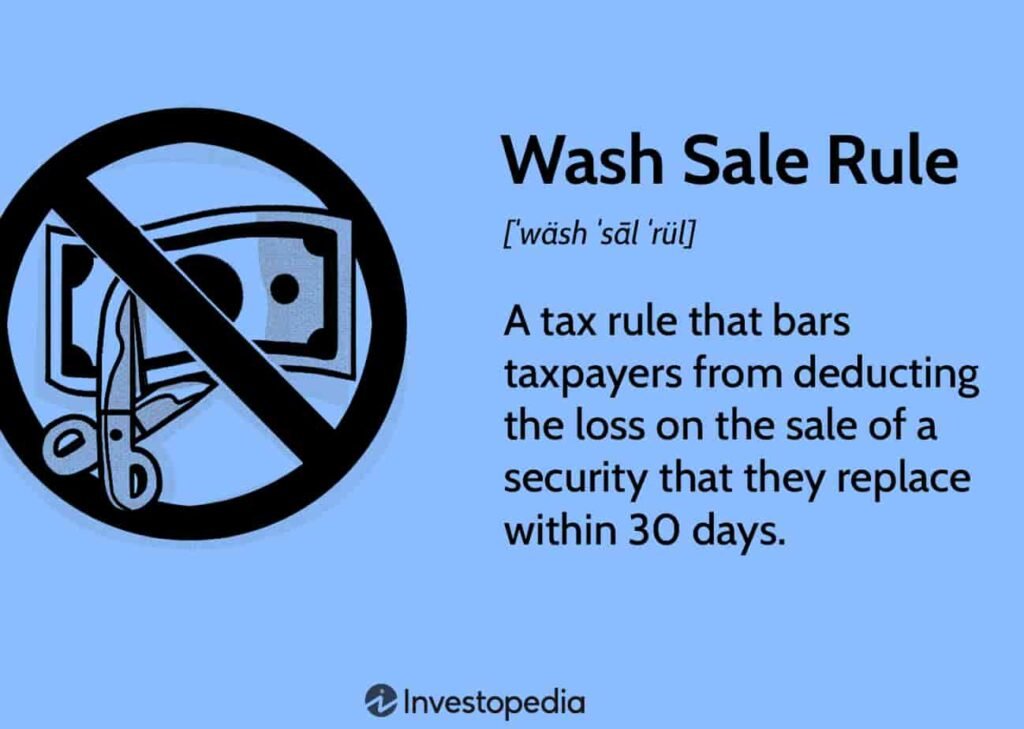
Understanding why this rule appears—and why the Internal Revenue Service does not enforce it on standard foreign accounts—saves you from costly mistakes. In the United States, Internal Revenue Code Section 1091 prevents domestic citizens from selling a losing security to claim a tax deduction and buying back a “substantially identical” asset within thirty days.
Because Non-Resident Aliens pay zero US tax on stock appreciation, the American wash sale restriction is irrelevant to your IRS obligations.
However, being exempt from the American rule does not give you a free pass to ignore tax-loss harvesting rules in your home country. While the IRS only withholds a fifteen to thirty percent tax on quarterly dividends, your local tax authority likely taxes your global investment profits.
Many jurisdictions enforce their own domestic equivalents of the wash sale rule, meaning an uncoordinated year-end sell-off on Wall Street can trigger disallowed losses locally.

The IRS Wash Sale Rule Rarely Touches!
To grasp how the wash sale rule non-residents framework operates, look at how the Internal Revenue Service categorizes foreign portfolio returns.
When you sign Form W-8BEN upon opening an international brokerage account, your earnings are split into two buckets: Fixed, Determinable, Annual, or Periodical (FDAP) income and capital gains.
Your dividends face immediate withholding at the source, whereas capital gains from selling shares remain completely tax-exempt in the United States.
Because the federal government does not tax the capital gains of a standard Non-Resident Alien, it also refuses to subsidize your trading losses. Even if your technology holdings drop sharply after a hawkish Federal Reserve interest rate decision, you cannot use those realized capital losses to reduce the thirty percent withholding tax taken from your SPY or QQQ dividends.

Under 183 Days and More
Without a US capital gains bill to lower, an IRS wash sale adjustment has zero impact.
There is only one rare exception where a foreign citizen becomes subject to Internal Revenue Code Section 1091.Financial experts note that international students or temporary visa holders physically present in the United States for 183 days or more during a calendar year lose their standard exemption:
- Under 183 Days: Pay 0% US capital gains tax and ignore IRS wash sales.
- 183 Days or More: Net gains face a 30% flat US tax.
- Local Rules: Home authorities enforce domestic cost-basis rules.
When Home Country Enforces Restrictions
While the Internal Revenue Service leaves your capital gains alone, the tax agency in your country of residence is far less forgiving. Most developed nations tax residents on worldwide capital gains and permit tax-loss harvesting to reduce that annual burden.
To stop investors from manufacturing artificial losses at year-end while keeping the exact same market exposure, foreign governments enforce strict anti-avoidance laws that mirror the American wash sale statute.
If you live in Canada, the Canada Revenue Agency enforces the “Superficial Loss Rule,” which covers a sixty-one-day window (thirty days before and thirty days after the sale).
Bed and Breakfasting Rule: Jurisdictions and Rules
Meanwhile, the United Kingdom applies the “Bed and Breakfasting” rule, prohibiting investors from repurchasing the same security within thirty days after a sale. Always consult with a tax professional in your local jurisdiction to verify the exact waiting period before buying back a losing stock.
A major operational trap occurs when international investors rely on automated year-end tax reports generated by American brokerages.
Because US platforms calculate cost basis using Internal Revenue Code Section 1091 and First-In, First-Out (FIFO) accounting, their numbers rarely match local requirements like Canada’s Adjusted Cost Base (ACB) or the UK’s Section 104 pooling.
You must track raw trade executions independently in your local currency rather than copying a US brokerage statement.
| Jurisdiction | Anti-Avoidance Rule | Repurchase Window | Disallowed Loss Treatment |
|---|---|---|---|
| United States (NRA <183 Days) | IRC Section 1091 | None (0% Gains Tax) | Irrelevant for IRS Taxes |
| Canada (Tax Residents) | Superficial Loss Rule | 30 Days Before & After | Added to Adjusted Cost Base |
| United Kingdom (Residents) | Bed and Breakfasting | 30 Days After Sale | Matched to New Purchase |
| Australia (Tax Residents) | Part IVA Wash Sale | Intent-Based Review | Disallowed by ATO Audit |
ETF Proxy Swapping to Harvest Losses Legally
The smartest way for global investors to harvest capital losses for their local tax return without sitting in cash for thirty days is executing an ETF proxy swap. Even in jurisdictions with strict superficial loss rules, tax laws typically only penalize you for buying back the exact same ticker or an identical underlying index.
By selling an underperforming fund and immediately purchasing a structurally different ETF, you lock in the deduction while staying invested.
For example, if your position in the Invesco QQQ Trust (QQQ) is underwater during a tech correction, selling QQQ and buying QQQM the next morning could trigger a local superficial loss challenge because both track the Nasdaq-100 index. Instead, swapping from QQQ into a broader technology ETF like XLK or VGT changes the underlying index completely.
Historical data suggests that maintaining continuous market exposure during volatile drawdowns protects compounding far better than holding cash.

The Hidden Risks in International Investing
Executing tax-loss harvesting across borders exposes Non-Resident Aliens to invisible structural frictions that can outweigh a modest local tax deduction. First, switching between different ETFs introduces Tracking Error; if your replacement fund lags the benchmark during a sudden Wall Street rebound, your missed upside can exceed your tax savings.
Second, selling a high-yielding ETF around its ex-dividend date alters your Tax Withholding timeline,subjecting distributions to a 15% to 30% IRS deduction.
Third, international traders who use borrowed funds or options to bridge the thirty-day waiting period face severe Margin Risk. Selling a losing stock while simultaneously selling put options on the same ticker triggers wash sale violations in many jurisdictions and exposes your account to forced liquidations during volatility spikes.
Furthermore, holding over $60,000 in US-domiciled ETFs like SPY or IVV leaves your portfolio vulnerable to the 40% US Estate Tax, unlike Ireland-domiciled UCITS ETFs.

Frequently Asked Questions
Why does Interactive Brokers show a wash sale on my statement if I am a Non-Resident Alien?
Global brokerages built on US clearing infrastructure run a single cost-basis engine programmed for Internal Revenue Code Section 1091.
Even with a valid Form W-8BEN on file, the software flags any repurchase made within thirty days of a loss and adjusts the displayed cost basis. For a Non-Resident Alien spending under 183 days in the US, this alert is purely cosmetic.
Does selling a US ETF and buying an Irish UCITS ETF trigger a wash sale?
Under United States rules, a Non-Resident Alien does not pay capital gains tax, so switching from SPY or VOO into an Ireland-domiciled equivalent like CSPX or VUAA creates zero IRS issues.
In your home country, however, tax authorities vary on whether a US ETF and an Irish UCITS ETF tracking the S&P 500 count as identical property. Swapping into an MSCI USA UCITS fund eliminates audit risk.
How do currency fluctuations affect cross-border tax-loss harvesting?
This is a critical blind spot for international investors trading in United States Dollars. Your home country calculates capital gains and losses by converting both the original purchase price and the final sale price into your local currency on the exact trade dates.
If a US stock drops 10% in dollar terms, but the US Dollar strengthens by 15% against your local currency over that period, you realize a taxable gain locally.

Mastering Cross-Border Tax Efficiency
Navigating Wall Street brokerage software and international tax law becomes simple once you separate American software defaults from your actual legal obligations. For most Non-Resident Aliens, the wash sale rule non-residents alert inside a trading platform is background noise generated by US-centric accounting systems.
Because your capital gains remain 100% exempt from Internal Revenue Service taxation under a valid Form W-8BEN, you never owe Uncle Sam extra tax.
Instead of letting US brokerage notifications dictate your portfolio strategy, redirect your focus toward the rules that genuinely impact your net worth. Track your trades in your local currency, respect your home country’s superficial loss windows, and use smart ETF proxy swaps—or Ireland-domiciled UCITS funds—to keep your capital compounding efficiently.
Review your open positions before your local tax year ends, verify your currency-adjusted cost basis, and turn market volatility into a legal tax-saving advantage.