

Investors’ Note: Fractional share investing enables European beginners to buy expensive U.S. stocks by using modern, regulated platforms that divide whole shares into affordable micro-dollar amounts.
Fractional share investing allows European individuals to purchase micro-slices of expensive U.S. stocks by utilizing regulated platforms that split whole equities into affordable dollar amounts. For years, accessing high-priced Wall Street titans felt entirely out of reach for retail participants across the Atlantic.
Today, the rapid rise of modern micro-investing platforms has completely democratized global financial markets, enabling seamless capital allocation. This technological shift means that geographic boundaries and exorbitant capital requirements no longer prevent everyday individuals from participating in the profound wealth-building mechanisms of the American economy.
Investor Comment:
Many novice investors worry about risking too much capital at once when first entering foreign stock markets, and this hesitation is completely normal. In my personal experience navigating international equities, utilizing fractional shares was the exact catalyst that finally allowed me to build a globally diversified portfolio without aggressively draining my savings account.
By purchasing tiny slices of established U.S. stocks, I could comfortably test the waters of the S&P 500 securely. According to financial experts, starting with small positions and gradually scaling your exposure is observed to be an incredibly effective psychological strategy for long-term investing success.

Fractional Share Investing Mechanics
The underlying architecture of fractional share investing is relatively straightforward, operating entirely on the premise of capital accessibility. When a European investor places an order for a highly-priced American asset, the modern brokerage account aggregates multiple fractional orders from various clients to purchase a complete equity.
The broker then algorithmically distributes the corresponding micro-slices back to the individual accounts based on their exact monetary contribution. This innovative process effectively bridges the gap between limited personal capital and the massive market capitalizations of elite global corporations.
It is widely observed by market analysts that this structural evolution has fundamentally altered retail trading volume across major indices. Instead of saving for months to afford a single unit of a prominent technology giant, European participants can now instantly deploy small increments of capital.
This immediate deployment prevents cash drag, ensuring that every available Euro is actively participating in wealth accumulation rather than sitting idle in a low-yield savings account. Utilizing these modern financial instruments empowers individuals to capture market momentum precisely when it occurs.

Brokerage Infrastructure: How Platforms Split High-Priced Assets
To facilitate these seamless micro-transactions, a brokerage infrastructure must possess highly advanced internal ledger systems and robust liquidity protocols. Traditional exchanges do not actually trade fractions; rather, the clearinghouse executes a standard full-share transaction while the broker acts as the custodian holding the ultimate legal title.
The platform then mathematically allocates the beneficial ownership of these fractional pieces to the respective retail clients, completely transparently. According to regulatory observers, this sophisticated internal accounting ensures that user balances accurately reflect real-time market movements without disrupting exchange liquidity.
This custodial arrangement also implies that the specific platform you choose carries a substantial responsibility for accurate trade execution. Because the investment platform acts as the intermediary holding the aggregate shares, clients must ensure they utilize highly regulated and financially stable institutions.
While the technical splitting of high-priced assets happens instantaneously on your screen, the underlying clearing process requires immense computational power and strict adherence to financial compliance standards. Trusting a reputable provider ensures your international exposure remains highly secure and structurally sound.
Dividend Allocation: Proportional Income for European Investors
A critical benefit of utilizing fractional share investing is the continued eligibility to receive corporate distributions without owning whole units. When an American company issues a quarterly dividend, European investors holding micro-slices receive a payout precisely proportional to their fractional ownership.
If you own one-tenth of a share in a prominent dividend stock, you will receive exactly one-tenth of the declared dividend payout, automatically credited to your brokerage balance. This proportional allocation ensures that retail participants do not miss out on the vital compounding effects of passive income.
European Brokerage Access: Navigating
Securing direct European brokerage access to the New York Stock Exchange involves navigating a distinct set of international financial regulations. For decades, cross-border trading was heavily restricted by exorbitant fees and complex compliance requirements that deterred everyday retail participants.
Fortunately, the rapid expansion of digital-first financial technology has streamlined this process, allowing residents of the European Union to seamlessly access robust American equities.
However, understanding the basic legal frameworks governing these international capital flows remains essential for maintaining a secure and highly tax-efficient portfolio.

One of the primary regulatory considerations involves the submission of a W-8BEN form, which is mandatory for non-U.S. residents earning income from American assets. This critical document prevents excessive double taxation on your dividend income by establishing your status as a foreign investor under international tax treaties.
Most reputable European brokers now integrate this form directly into their digital onboarding flow, reducing the administrative burden to a few simple clicks. Properly managing this specific documentation is crucial for optimizing your net returns when engaging in global market participation.
Optimal Broker Requries and U.S. Stock Markets
Selecting the optimal broker requires analyzing more than just user interface aesthetics; it demands a deep dive into core safety metrics. Prioritizing these secure gateways ensures your journey into U.S. stock markets is both profitable and fundamentally protected against institutional failure.
- Verifying strict regulatory licensing and robust capital protection schemes.
- Confirming transparent internal accounting for all fractional assets.
- Ensuring adherence to established European investor compensation funds.

Regulatory Compliance: MiFID II and Cross-Border Considerations
The Markets in Financial Instruments Directive (MiFID II) serves as the foundational regulatory framework governing investment services across the European Economic Area. This comprehensive legislation mandates strict transparency regarding trading costs, execution quality, and the overall suitability of complex financial products.
While fractional shares themselves are generally classified as standard retail instruments, the derivative contracts sometimes used to mimic them are subject to tighter scrutiny. Therefore, it is observed that confirming whether your broker offers genuine fractional equity versus a synthetic derivative is a vital regulatory compliance check.
Currency Conversion Fees: Managing EUR to USD Exchange Costs
Because American equities are exclusively priced in dollars, European investors must consistently navigate the friction of currency conversion fees. Every time you deploy capital into a U.S. asset, your home currency—whether Euros, Pounds, or Francs—must be exchanged at the prevailing spot rate.
Many zero-commission brokers secretly offset their operational costs by applying a noticeable markup to this foreign exchange spread. Over time, these hidden FX fees can aggressively erode your profit margins, particularly if you are frequently trading small fractional increments on a daily basis.

Portfolio Diversification Strategies
Implementing robust portfolio diversification strategies is historically recognized as the most effective defense against localized economic volatility. By utilizing fractional shares, European investors can construct a highly resilient, globally distributed asset base regardless of their initial starting capital. Instead of concentrating funds into a single domestic corporation, you can simultaneously acquire exposure to American technology, healthcare, and consumer goods.
This broad asset allocation drastically reduces the idiosyncratic risk associated with any single company’s underperformance, smoothing out your overall return trajectory over the coming decades.
The true power of micro-investing lies in its ability to replicate the comprehensive weighting models utilized by major market indices like the S&P 500. Without fractional capabilities, achieving perfect proportional representation of five hundred massive corporations would require hundreds of thousands of dollars in capital.
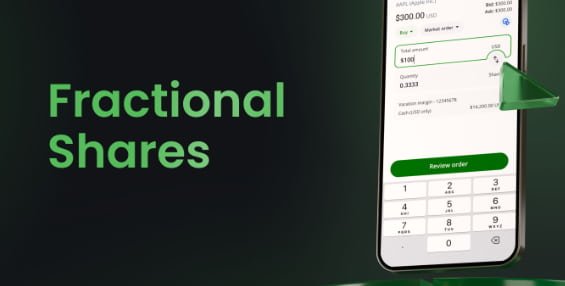
Today, an investor can dedicate a modest monthly sum and mathematically distribute it across dozens of distinct U.S. equities, precisely balancing their geographic and sector-specific risks. This profound accessibility empowers retail users to build institutional-grade investment portfolios from their smartphones.
Fractional Shares Comparison Table
To clearly illustrate how this modern infrastructure outperforms traditional limitations, we can deeply examine the specific advantages through a structured comparison model. Understanding these fundamental structural differences highlights exactly why micro-investing is rapidly becoming the globally dominant approach for building wealth.
By carefully analyzing factors such as capital requirements and execution speed, investors can make highly informed decisions regarding their personal portfolio architecture. The data outlined below provides a clear, objective view of the immediate benefits.
| Feature Comparison | Traditional Whole Share Investing | Modern Fractional Share Investing |
| Capital Requirement | High (Requires full share price) | Low (Invest specific dollar amounts) |
| Diversification Speed | Slow (Dependent on saving cash) | Instant (Split funds across assets) |
| Cash Drag Impact | High (Uninvested leftover cash) | Low (Every cent is actively deployed) |
| Dollar-Cost Averaging | Difficult for high-priced stocks | Seamless and highly automated |
Dollar-Cost Averaging: Consistent Accumulation of Mega-Cap Tech
Utilizing the dollar-cost averaging (DCA) methodology is vastly simplified when paired with the mechanics of fractional share investing. This classic strategy involves investing a fixed monetary amount at regular intervals, regardless of current market conditions or asset prices. When targeting extremely expensive mega-cap tech stocks, purchasing whole units on a strict monthly schedule is financially impossible for most average earners.
However, fractional capabilities allow you to consistently inject exactly fifty or one hundred Euros into your favorite American technology giants every single month without hesitation.
Over time, this consistent wealth accumulation strategy naturally smooths out the severe price fluctuations inherent in global stock markets. When equity prices decline, your fixed monthly contribution automatically acquires a larger fractional slice of the underlying business, lowering your average cost basis.
Conversely, when markets soar, you purchase fewer slices but enjoy the rapid appreciation of your existing holdings. Financial experts consistently note that this automated, emotionless approach to buying international equities is the most reliable pathway for retail investors to permanently compound their net worth.
Avoiding Overconcentration: Balancing High-Conviction Growth
While gaining access to high-growth American sectors is exciting, investors must actively work towards avoiding overconcentration in popular technology trends. It is incredibly tempting to funnel all available capital into a few highly publicized artificial intelligence or electric vehicle manufacturers.
However, relying exclusively on high-conviction growth stocks exposes your entire portfolio to severe drawdowns during sector-specific economic corrections. Fractional shares allow you to satisfy your appetite for rapid growth while simultaneously allocating protective capital toward stable, defensive industries like utilities and consumer staples.
Frequently Asked Questions (FAQ)
Can European citizens legally buy fractional shares of U.S. stocks?
Yes, European citizens can legally purchase fractional shares of U.S. equities by utilizing modern, highly regulated brokerage platforms that offer direct international market access.
Do fractional shares pay dividends to international investors?
Yes, investors holding fractional shares are fully entitled to receive corporate dividend payouts directly proportional to their exact micro-ownership percentage.
What are the hidden fees of buying U.S. stocks from Europe?
The most common hidden costs associated with purchasing American equities from overseas are foreign exchange markup fees and hidden currency conversion spreads.