
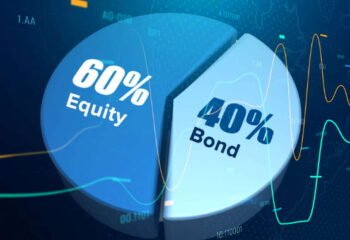
Editor’s Pick: The 60/40 portfolio is an investment strategy allocating 60% to equities for capital growth and 40% to fixed-income bonds for downside protection, designed to offer reliable risk-adjusted returns over long time horizons. Financial experts generally observe that this traditional asset allocation model provides a reliable shock absorber during economic downturns, though high inflation can temporarily disrupt its effectiveness.
By anchoring the portfolio with US Treasuries or high-quality corporate debt, international investors aim to offset the inherent market volatility of the global equity markets.
This structural balance is theoretically engineered to capture long-term compounding interest while minimizing severe capital drawdowns, though modern macroeconomic shifts require continuous assessment from proactive investors.

Experinces from International Investors!
Many international investors feel deeply anxious when both stocks and bonds drop simultaneously, wondering if their life savings are exposed to a broken system; believe me, this worry is completely normal and entirely justified in today’s unpredictable climate.
During my own journey managing investments from outside the US, I vividly remember the intense panic of 2022 when the “safe” bond portion of my portfolio bled just as fast as my technology stocks.
However, experience and historical data have shown me that abandoning a balanced strategy during a widespread panic often does more long-term harm than good. Investing is never a perfectly smooth ride, and deeply understanding the mechanics behind these market cycles is what ultimately helps us sleep peacefully at night.

The Core Mechanics of the 60/40 Portfolio Strategy
The foundational premise of the 60/40 portfolio relies heavily on the historical negative correlation between stock prices and bond yields, meaning they typically move in opposite directions during economic cycles. When global economic growth is strong, the 60% allocated to equities—often tracking major indices like the S&P 500—drives the primary capital appreciation and overall wealth accumulation.
Conversely, during recessionary fears, central banks usually cut interest rates, which historically boosts the underlying value of the 40% fixed-income portion. This inverse relationship is generally considered by portfolio managers to be the ultimate defense mechanism, smoothing out the aggressive peaks and valleys of a purely stock-based investment strategy over time.
For international investors, accessing this classic diversification model has become incredibly streamlined through globally available Exchange-Traded Funds (ETFs) on major brokerage platforms. Instead of manually purchasing individual corporate stocks and municipal bonds, global participants can utilize comprehensive funds that automatically maintain this strict 60/40 ratio without daily intervention.
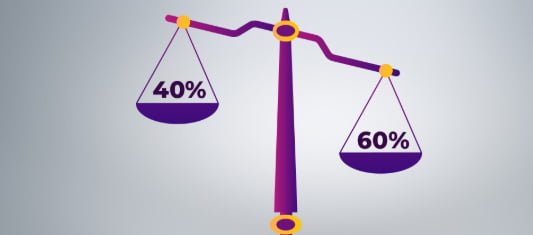
Asset Allocation and “Forget It” Strategy
Financial analysts observe that this “set it and forget it” approach significantly reduces the behavioral mistakes retail investors often make, such as panic-selling during a crash or aggressively buying at market peaks. Maintaining this disciplined asset allocation requires periodic portfolio rebalancing, typically conducted annually, to ensure the holdings do not accidentally drift into a riskier 70/30 or overly conservative 50/50 weighting.
Despite its structural simplicity, the ultimate success of the 60/40 portfolio heavily depends on the prevailing macroeconomic environment and the underlying strength of the chosen global assets. While historical data stretching back to the 1980s showcases an impressive track record of risk-adjusted returns, financial advisors routinely caution against treating past performance as an absolute guarantee of future results.
International investors must also carefully factor in currency exchange risks, as a rapidly strengthening US Dollar can heavily impact the localized returns of US-centric stock and bond holdings. Therefore, understanding the broader geopolitical landscape and integrating globally diversified bonds is often suggested to fortify this traditional investment framework against regional economic shocks.

Sovereign Debt and Risk Mitigation Dynamics
Effective asset allocation within the 60/40 framework involves selecting high-quality, diversified financial instruments rather than concentrating capital in narrow, highly speculative market sectors. Experts suggest that the equity portion should be broadly distributed across large-cap, mid-cap, and emerging market stocks to actively capture global growth while avoiding single-country exposure traps.
On the defensive side, the 40% bond allocation is typically anchored by sovereign debt, such as US Treasury bonds, which are globally perceived as safe-haven assets during periods of severe market stress. This strategic layering ensures that if one specific sector experiences a drastic downturn, the overall portfolio structure remains resilient, functional, and capable of eventual recovery.
Beyond just picking the right index ETFs, successful risk mitigation for international investors requires a crystal-clear understanding of their personal investment horizon and emotional risk tolerance. The 60/40 portfolio is generally tailored for investors with a medium to long-term horizon—typically 5 to 10 years or more—who cannot stomach the violent, sleep-depriving swings of a 100% equity portfolio.

Behavioral economists observe that by intentionally capping the potential upside to protect the inevitable downside, investors are statistically much more likely to stay fully invested during terrifying bear markets. Ultimately, the true value of this allocation lies not in beating the market every year, but in preventing catastrophic losses that could permanently derail long-term retirement goals.
Market Volatility and the 60/40 Portfolio Correlation
The biggest contemporary threat to the 60/40 portfolio is a macroeconomic phenomenon where extreme inflationary pressures cause both stocks and bonds to decline simultaneously, breaking their traditional negative correlation. We observed this exact market anomaly in 2022, when aggressive interest rate hikes by the Federal Reserve crushed bond prices while recession fears simultaneously dragged down global equity markets.
When inflation runs hot, the fixed interest payments of traditional bonds rapidly lose their purchasing power, rendering the 40% “safe” portion of the portfolio highly vulnerable to significant capital erosion. This synchronized drawdown leads many financial commentators to prematurely declare the strategy “dead,” though long-term data heavily suggests these correlation breakdowns are usually temporary, cyclical events.
To better understand how different macroeconomic environments physically impact this strategy, let’s look at the historical performance and structural vulnerabilities of the standard asset mix. Institutional investors continually stress-test these allocations against various economic scenarios to gauge their overall systemic resilience.

Economic Environment and Diversification Table
When inflation is low, the portfolio thrives naturally, but stagflation introduces severe, unavoidable headwinds for retail investors. By analyzing these distinct cyclical patterns, international investors can better mentally prepare for the inevitable fluctuations that occur over a multi-decade investing journey, preventing panic-induced selling when the markets temporarily turn deep red.
| Economic Environment (Entity) | Equity Performance (60%) | Bond Performance (40%) | 60/40 Portfolio Impact |
| Low Inflation & Growth | Strong Capital Appreciation | Stable Yield Generation | Optimal Risk-Adjusted Returns |
| Deflationary Recession | Severe Capital Drawdown | High Capital Appreciation | Downside Heavily Cushioned |
| High Inflation (Stagflation) | Moderate to Severe Drawdown | Capital Erosion / Negative Yield | Simultaneous Losses (High Risk) |
To fortify the traditional model against these synchronized losses, wealth management experts often recommend diversifying the 40% bucket with the following modern alternatives:
- Short-Term Treasuries: Drastically reduces the portfolio’s exposure to long-term interest rate fluctuations.
- TIPS (Treasury Inflation-Protected Securities): Mechanically adjusts the principal value in tandem with official government inflation rates.
- Global Aggregate Bonds: Strategically spreads fixed-income risk across multiple sovereign nations, economies, and fiat currencies.
Inflationary Pressures on Fixed Income Holdings
Persistent inflationary pressures represent the most significant structural headwind for the fixed-income portion of any globally diversified investment portfolio. When consumer prices rise rapidly, central banks are forced to increase benchmark interest rates, which mechanically drives down the resale value of existing, lower-yielding bonds on the secondary market. Financial analysts note that long-duration bonds are particularly sensitive to these monetary shifts, experiencing severe price drops that can temporarily wipe out years of accumulated interest payments.
For international participants holding US assets, this scenario is often heavily compounded by fluctuating currency exchange rates, making the “safe” side of the portfolio feel surprisingly hazardous.
Despite these very real psychological challenges, completely abandoning the bond allocation during inflationary periods is generally viewed by economists as a dangerous, short-sighted overreaction. Higher interest rates eventually mean that newly issued bonds will offer much more attractive, sustainable yield generation for the foreseeable future.

As older, low-yielding bonds mature, portfolio managers can strategically reinvest that returned capital into these higher-yielding instruments, gradually restoring the protective power of the fixed-income allocation. Therefore, while inflation can cause sharp short-term pain in the 60/40 portfolio, it simultaneously resets the broader bond market for healthier, more robust long-term returns, reinforcing the strategy’s core philosophy of unwavering patience.
Strategic Adaptation for Global Portfolios
Successfully maintaining a balanced portfolio in today’s complex financial landscape requires global investors to remain highly adaptable, periodically reviewing their chosen asset classes without abandoning their core long-term philosophy. As the global economy continuously shifts between periods of rapid technological expansion and tight monetary policy, rigidly clinging to outdated bond instruments can expose international participants to unnecessary, uncompensated risks.
Wealth managers strongly emphasize that the true essence of the 60/40 portfolio is not the strict mathematical ratio, but the underlying psychological commitment to intentional diversification and risk management. By staying informed about macroeconomic trends and being willing to slightly adjust the sails when the winds change, investors can robustly protect their hard-earned capital.
Ultimately, managing your financial future from an international perspective is a lifelong marathon, not a frantic sprint driven by the latest sensationalist market headlines. Take a proactive step today by reviewing your current brokerage accounts to ensure your asset allocation genuinely reflects your personal retirement timeline and emotional capacity for volatility.

If recent market volatility has kept you awake at night, it might be the perfect time to systematically rebalance your holdings to restore that crucial, sleep-promoting defensive buffer. The traditional strategy is far from dead; it is simply evolving, waiting for highly disciplined investors to utilize its time-tested framework to build lasting, generational wealth safely.
Frequently Asked Questions (FAQ) on 60/40 Portfolio
Is the 60/40 portfolio officially dead for modern international investors?
No, rumors of its death are widely considered by major financial institutions to be greatly exaggerated. While the strategy suffered historically rare simultaneous losses in 2022 due to aggressive central bank rate hikes, long-term market data suggests that the negative correlation between stocks and bonds eventually normalizes.
Experts observe that as inflation cools and interest rates stabilize, the protective mechanics of the 40% bond allocation typically resume their traditional, vital role as a shock absorber against sudden equity market crashes. The strategy isn’t dead; it simply requires retail investors to be much more selective and deliberate about their modern fixed-income choices.
How can international investors implement a 60/40 strategy efficiently and safely?
International investors can easily implement this strategy by utilizing globally diversified, low-cost index ETFs offered by almost all major brokerage platforms. Instead of navigating the overwhelming complexities of buying individual US Treasuries or corporate bonds, individuals can purchase an all-in-one allocation fund, or manually pair a global stock ETF with a global aggregate bond ETF.
Financial advisors strongly suggest paying close attention to foreign withholding taxes and currency conversion fees, as these hidden, creeping costs can silently erode the compound interest generated by the 60/40 portfolio over a multi-decade investment horizon.
Should young, aggressive investors use a strict 60/40 asset allocation?
For investors in their 20s or 30s with a very long time horizon, a strict 60/40 split is generally considered far too conservative by most modern wealth managers. Because younger individuals have several decades to effortlessly recover from severe market downturns, they are often advised to tilt their asset allocation much heavier towards equities (such as 80/20 or 90/10) to maximize their long-term wealth accumulation potential.
However, if a young investor possesses a remarkably low risk tolerance and is highly prone to panic-selling during volatility, adopting a 60/40 portfolio might be the exact psychological safety net they need to stay consistently invested.


Pingback: BND vs. AGG: Shield Your USD Portfolio With Total Bond ETFs.