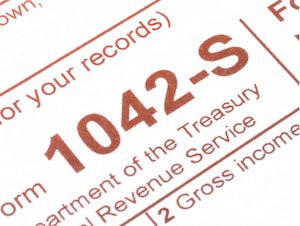
Editor’s pick: IRS Form 1042-S is the official tax document used by United States financial institutions to report your US-sourced income and any corresponding tax withheld directly to you as a Non-Resident Alien.
Navigating financial markets as an international investor requires understanding specific reporting mechanisms. When investing in assets like SPY or QQQ from outside the country, brokerages automatically withhold a percentage of dividend income.
This form is simply the annual receipt of those deductions, validating how much money stayed in the US and what treaty benefits you successfully claimed through your W-8BEN form.

Real Life Experience of Investors
Many international investors mistakenly believe that buying American equities will automatically drag them into complicated tax filings with the Internal Revenue Service.
Fortunately, the system is designed to be largely passive for those who do not live in the United States. Your brokerage handles the heavy lifting by taking the standard thirty percent withholding tax before the cash ever reaches your account.
IRS form 1042s arrives early in the year to document these transactions, ensuring complete transparency between your trading account, the federal government, and your home country’s tax authorities.
Understanding this document empowers you to build an efficient global portfolio without unnecessary anxiety about unexpected compliance issues. Financial experts note that keeping accurate records of these deductions is essential for claiming foreign tax credits in your local jurisdiction, avoiding the trap of double taxation.

The Core Purpose of IRS Form 1042-S
As a Non-Resident Alien generating returns from American markets, you are subject to distinct taxation rules completely separate from domestic citizens. While capital gains on stock appreciation are generally exempt from US taxes for non-residents, income generated through dividends or fixed-interest yields is treated very differently.
Form 1042-S serves as the definitive record of these specific income streams and the precise amounts withheld by your brokerage. Every time a company like Apple or a fund like Vanguard distributes a dividend, the transaction is tracked and reported on this annual document.
The architecture of this system relies heavily on the W-8BEN document you signed when opening your international brokerage account. That initial declaration proves your foreign status, while the subsequent reporting confirms that the financial institution applied the correct regulatory framework to your earnings throughout the calendar year.

The Internal Revenue Service and Investors
Without this reporting mechanism, the Internal Revenue Service would have no systematic way to verify that foreign investors are paying their mandated share of taxes on income generated within the borders of the United States.
You will typically receive this paperwork from your broker between mid-February and the middle of March, reflecting all relevant financial activity from the previous calendar year. It is crucial to review the boxes detailing the gross income and tax withheld to ensure they align perfectly with your personal portfolio statements.
If your home country taxes global income, this specific form becomes your primary evidence to prove that taxes were already extracted in the United States, allowing your accountant to properly offset your domestic tax liabilities.

Navigating Tax Treaties to Reduce Your Burden
The default tax withholding rate for international investors receiving United States-sourced dividends is a steep thirty percent, which creates a significant drag on long-term compound growth. However, the US maintains bilateral tax treaties with dozens of nations specifically designed to encourage cross-border investment and economic cooperation.
If your country of residence has an active treaty, that punitive thirty percent rate can often be reduced to fifteen percent, or even lower. These negotiated reductions are the primary reason why maintaining an accurate profile with your brokerage is absolutely essential.
Claiming these beneficial treaty rates requires proactive verification on your part, primarily through the accurate submission of your W-8BEN paperwork every three years. To ensure smooth processing, international investors should always focus on the following administrative elements:
- Maintaining an updated permanent foreign residential address on your broker’s file.
- Providing your correct foreign tax identifying number when legally required.
- Renewing the certification before the strict three-year expiration window permanently closes. When properly executed, your Form 1042-S will accurately reflect this lower, treaty-negotiated rate, confirming that you are not overpaying.

Investor Status and Standart & IRS
Historical data suggests that international investors who fail to claim these treaty benefits leave substantial amounts of capital on the table, significantly underperforming their benchmark indexes.
Therefore, always consult with a qualified tax professional in your home country to understand exactly how these bilateral agreements apply to your specific financial situation.
Some nations require you to translate or officially submit your tax form alongside your annual local tax return to qualify for domestic tax credits, thereby optimizing your overall asset allocation legally.
| Investor Status | Standard Dividend Withholding | IRS Documentation Required |
|---|---|---|
| Non-Treaty Resident | 30% Default Rate | Form 1042-S & Valid W-8BEN |
| Treaty Country Resident | 15% (Varies by Nation) | Form 1042-S & Valid W-8BEN |
The Hidden Risks in International Investing
Navigating foreign markets exposes your capital to unique vulnerabilities that extend beyond standard market volatility, demanding a proactive approach to portfolio management. The most prominent invisible threat is the withholding tax drag, where the constant taxation on dividends severely impacts your compound interest trajectory over multiple decades.
Additionally, investors utilizing leverage face margin risk; relying on borrowed funds can force unexpected liquidations during sharp market corrections. Because Non-Resident Aliens are not protected by standard domestic tax loss harvesting rules, sudden margin calls can be uniquely devastating.
Another critical factor to monitor is tracking error, particularly when utilizing Ireland-domiciled UCITS funds to legally circumvent US estate taxes and optimize dividend withholding rates. While these offshore funds mirror indices like the S&P 500, underlying fees and structural differences can cause their performance to slightly deviate from the actual American benchmark.
Furthermore, estate tax exposure represents a massive hidden liability; without proper structuring, foreign investors holding over sixty thousand dollars in US-sited assets risk losing up to forty percent of their portfolio value to the federal government.
Frequently Asked Questions: IRS Form
Do I need to file a US tax return if I receive this form?
In the vast majority of scenarios, a Non-Resident Alien whose only American income consists of portfolio dividends does not need to file a formal tax return like Form 1040-NR.
Because the broker automatically withholds the required tax before distributing the cash into your account, your obligation to the federal government is considered fully satisfied. However, if you are claiming a refund due to an over-withholding error, filing a return becomes a necessary administrative step to recover your legally entitled funds.
What happens if my brokerage fails to send me this document?
First, check the digital tax center or document vault within your online brokerage portal, as most modern institutions no longer mail physical paper copies overseas.
If the document is missing by the end of March, it likely means your portfolio did not generate enough US-sourced dividend income to trigger the reporting threshold, or you only held capital gains-producing assets. Always verify directly with customer support to ensure your W-8BEN profile remains in good standing and no administrative errors have occurred on your account.
Can I use this official form to lower the taxes in my home country?
Yes, this is precisely why securing and understanding this document is so vital for international investors seeking maximum portfolio efficiency.
Most modern tax jurisdictions offer a foreign tax credit system designed to prevent citizens from being penalized for investing globally. By presenting this official document to your local tax authority, you can legally deduct the taxes already paid in the United States from the total amount you owe domestically, shielding your capital from the deeply inefficient framework of international double taxation.

Aligning Your Portfolio for Global Efficiency
Building a robust international portfolio requires more than just picking the right equities; it demands a clear comprehension of the legal frameworks governing global capital flow. Mastering the administrative realities of your investments transforms potential bureaucratic roadblocks into streamlined components of a highly effective wealth generation strategy.
IRS form 1042s is not something to be feared or ignored, but rather a standard operational receipt that proves your cross-border investment engine is functioning exactly as intended while remaining fully compliant with federal regulations.
Taking control of your financial future as a Non-Resident Alien means actively optimizing the variables that remain within your control, from treaty benefits to asset location. By ensuring your foreign status paperwork is constantly up to date, you eliminate unnecessary tax drags and allow the power of compound interest to work unimpeded.
Continue refining your approach, coordinate closely with local tax professionals to maximize your foreign credits, and maintain a disciplined, transparent approach to your American market exposure for decades to come.