

Investor Pick: Global investors prioritize holding Berkshire Hathaway (BRK.B) because it serves as a decentralized powerhouse combining robust insurance float liquidity, an elite diversified equity portfolio, and a historically proven value investing framework that consistently mitigates downside risk during economic volatility.
Deciphering the continuous appeal of Berkshire Hathaway (BRK.B) requires an understanding of how institutional stability counters systemic market vulnerability. Long-term wealth accumulation relies heavily on acquiring assets that possess durable competitive advantages and predictable cash flows. For decades, global asset managers have utilized this specific conglomerate as a foundational anchor within diversified portfolios to weather severe inflationary cycles.
While speculative tech trends often capture short-term retail attention, seasoned wealth preservation specialists typically gravitate toward entities anchored by tangible industrial and operational output. Consequently, evaluating this asset reveals the timeless utility of conservative capital allocation within modern portfolios.
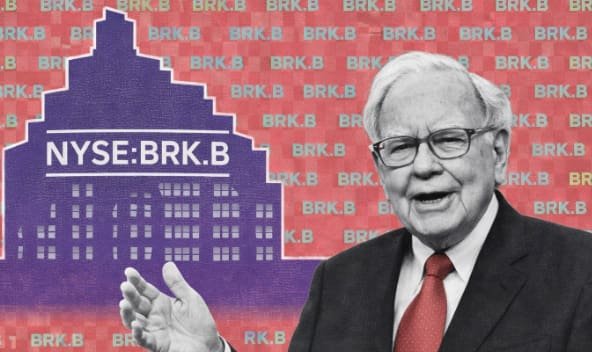
Commentary of Investor
Navigating the complex world of corporate equities often leaves retail market participants feeling overwhelmed by short-term macroeconomic noise. Many individual investors frequently experience deep anxiety when broad market indices turn volatile, which is completely natural given the unpredictable nature of global financial shifts.
Throughout years of observing market cycles, I have consistently noted that treating a portfolio as a collection of actual businesses, rather than mere tickers, completely changes your perspective. Berkshire Hathaway (BRK.B) functions less like a standard stock and more like an actively managed, highly resilient sovereign wealth fund.

Corporate: Berkshire Hathaway (BRK.B)
The operational framework of Berkshire Hathaway (BRK.B) relies on a decentralized corporate model that grants immense autonomy to its individual operating subsidiaries while centralizing all capital allocation decisions at the top executive level. This structure allows wholly-owned giants like BNSF Railway and Berkshire Hathaway Energy to focus entirely on day-to-day operational excellence without the burden of managing corporate liquidity or shareholder distributions.
Financial strategists observe that this unique separation of operations from capital deployment prevents the common corporate pitfall of inefficient reinvestment within struggling business units. Ultimately, this structural design ensures that capital generated anywhere within the empire is immediately funneled to its highest-value use.
The financial synergy generated by this arrangement creates a highly resilient compounding machine that thrives particularly well during periods of restrictive monetary policy. When public markets face liquidity contractions, the internal cash generation from these diverse subsidiaries provides the parent company with an unyielding war chest for distressed asset acquisition.

Market Liquidity and Prices
Many retail investors feel anxious when market liquidity dries up and stock prices plunge, which is entirely natural given the sudden decline in visible portfolio values. However, historical market cycles demonstrate that these exact periods of broader economic distress are precisely when the conglomerate executes its most lucrative, value-driven acquisitions.
The long-term stability offered by this corporate setup explains why both institutional and retail wealth managers view the stock as a reliable defensive vehicle. By embedding diverse, non-correlated businesses under a single corporate umbrella, the enterprise effectively creates an internal economic ecosystem that balances out individual market shocks.
For example, when retail manufacturing slows down, the steady revenues from regulated utility divisions often compensate for the temporary drop in consumer spending. Analysts suggest that this structural balance provides a masterclass in risk mitigation, making the asset an invaluable component for anyone prioritizing consistent capital preservation over speculative, high-beta gains.

Value Investing Principles: Core Moats
Sustaining a long-term competitive advantage, commonly referred to as an economic moat, is the primary criterion used to evaluate any potential addition to the Berkshire Hathaway (BRK.B) investment portfolio. An economic moat represents a business’s capacity to maintain structural superiority over its competitors, protecting its market share and pricing power from industry disruption.
Whether through massive brand equity, high switching costs, or low-cost production advantages, every core holding must exhibit these defensive traits. Market researchers consistently point out that companies possessing wide moats are significantly better equipped to maintain stable corporate earnings during prolonged macroeconomic downturns.
Calculating a strict margin of safety serves as the foundational risk-management rule governing all equity purchases and corporate buyouts within the value investing framework. This principle dictates that an asset should only be acquired when its market price sits substantially below its conservatively calculated intrinsic value. By insisting on this pricing discount, capital allocators protect the portfolio against inevitable errors in forecasting or unexpected operational headwinds.
Many market participants struggle with the patience required to wait for these valuation anomalies, experiencing a fear of missing out during speculative bull markets, which is a highly common psychological hurdle. Maintaining this strict valuation discipline ensures that capital is never deployed at overextended market peaks.

The Insurance Float Engine: How Insurance Outfits Fuel Growth
The foundational engine driving the spectacular growth of Berkshire Hathaway (BRK.B) is its massive insurance float, which provides a virtually cost-free source of investment capital. Insurance float represents the premium revenue collected from policyholders that has not yet been paid out in claims, allowing the company to invest these funds for its own benefit in the interim.
Because operations like GEICO and General Re consistently generate an underwriting profit, this massive pool of investable capital acts as an interest-free loan that never has to be repaid to a traditional lender. Financial analysts emphasize that this structural access to low-cost leverage gives the conglomerate a massive structural advantage over traditional investment funds.
The Equity Portfolio: Analyzing Top Stock Concentrations
The public equity portfolio of the conglomerate reflects a highly concentrated strategy that focuses massive amounts of capital into a select group of high-conviction businesses. Rather than over-diversifying across hundreds of mediocre equities, the portfolio concentrates its billions into industry-dominant players that exhibit exceptional return on equity and pristine balance sheets.
Key long-term holdings, including iconic consumer brands and major banking institutions, reflect a deep preference for businesses with highly sticky customer bases and predictable pricing power. Financial analysts frequently suggest that studying these specific equity concentrations provides a practical roadmap for identifying world-class businesses operating at global scale.

Evaluating the composition of these major holdings reveals a deliberate balance between stable, dividend-paying financial firms and high-cash-flow technology leaders. The inclusion of massive stakes in dominant consumer technology platforms showcases an evolution in the value investing framework, proving that digital ecosystems can possess incredibly wide economic moats.
Financial Metrics and Stability
Maintaining a historic level of cash reserves is a core strategic pillar that guarantees the absolute financial solvency of Berkshire Hathaway (BRK.B) under any conceivable economic distress scenario. The company deliberately maintains massive liquidity on its balance sheet, typically held in short-term U.S. Treasury bills, ensuring it never relies on volatile commercial paper markets or external banking credit lines.
This fortress-like balance sheet allows the enterprise to act as a liquidity provider of last resort to distressed corporations during systemic banking panics. Market experts suggest that this structural liquidity optimization represents the ultimate form of corporate financial risk management.
Analyzing key financial ratios like the price-to-book (P/B) ratio and operating earnings growth offers a clearer picture of the stock’s underlying valuation compared to speculative equity metrics. Because a significant portion of the company’s value is derived from its tangible asset base and insurance operations, historical price-to-book metrics remain a highly trusted tool for identifying ideal entry points.

Invesment Attributes Table of Berkshire
To better visualize how the conglomerate’s core financial characteristics compare against traditional asset classes, consider the structured data outlined below:
| Investment Attribute | Berkshire Hathaway (BRK.B) | Traditional Mutual Funds | Speculative Growth Equities |
| Primary Capital Source | Internal Insurance Float | External Client Deposits | Debt and Equity Issuance |
| Downside Risk Profile | Historically Low / Asset Backed | Medium / Market Dependent | High / Valuation Sensitive |
| Portfolio Concentration | High Conviction / Wide Moats | Broadly Diversified Indexes | Speculative / Early Stage |
| Cash Strategy | Opportunistic Excess Liquidity | Fully Deployed to Match Benchmarks | Rapid Burn Rate for Expansion |
Building Sustainable Wealth: Strategy
Integrating Berkshire Hathaway (BRK.B) into a modern investment strategy offers a highly efficient way to ground a portfolio in proven corporate value while maintaining exposure to global economic growth. As global markets grow increasingly complex and prone to algorithmic volatility, anchoring capital within a highly diversified, asset-backed conglomerate becomes a vital method for long-term wealth preservation.
Proactive portfolio builders use this equity to establish a solid defensive floor, allowing them to take measured risks elsewhere without endangering their foundational capital. Recognizing the distinct advantage of holding wide-moat businesses ensures that your long-term financial trajectory remains insulated from the unpredictable tides of speculative market cycles.
Embracing the core philosophies of patient capital allocation and rigorous margin of safety analysis empowers individuals to navigate volatile financial landscapes with absolute confidence. By shifting focus away from daily price fluctuations and concentrating on the structural earning power of high-quality enterprises, you cultivate a resilient mindset geared for multi-decade compounding success.
The true lesson of this value investing blueprint lies in its simplicity: buy excellent businesses at fair prices, trust elite management, and allow time to perform the heavy lifting. Taking action today to realign your asset allocation around these timeless fundamentals will pave a secure and prosperous path toward enduring financial independence.

Frequently Asked Questions: BRK.B
What is the primary operational difference between Berkshire Hathaway Class A (BRK.A) and Class B (BRK.B) shares?
The primary operational difference lies in the price point and fractional voting rights, as Berkshire Hathaway (BRK.B) shares were explicitly created to offer retail market participants a highly accessible entry point without the massive capital requirements of Class A shares.
Why does Berkshire Hathaway (BRK.B) historically choose not to pay a regular cash dividend to its shareholders?
The conglomerate historically avoids paying a cash dividend because its management can consistently compound that retained capital at a significantly higher rate of return than individual retail investors could achieve on their own.
How does the massive cash reserve of Berkshire Hathaway (BRK.B) protect global investors during severe market crashes?
The massive cash reserve acts as an ironclad financial cushion that completely insulates the corporation from liquidity crises while positioning it to exploit depressed asset valuations during panics.