
Editor’s Comment: Investing in Top US Healthcare ETFs like XLV and VHT provides Canadian and European portfolios with a recession-resistant hedge, leveraging non-discretionary medical spending and S&P 500 stability to protect capital during global economic volatility.
To effectively hedge against global market volatility, international investors should prioritize US-domiciled Healthcare ETFs that focus on high-barrier-to-entry pharmaceuticals and managed care providers, ensuring stable dividend income and capital preservation.
In the current 2026 financial landscape, where global markets face persistent inflationary pressures and shifting geopolitical alliances, Canadian and European investors are increasingly prioritizing capital preservation. The search for a “safe haven” often leads to the US equity market, but not all sectors are created equal when the goal is to balance growth with low volatility.

Current Trend Experiences
Over the past several years of tracking sector-specific ETFs, I have noticed that investors from Canada and Europe often miss the “innovation premium” that US healthcare entities command. In my experience, these ETFs act less like traditional equities and more like high-quality utilities with a growth kicker.
I believe that in the current 2026 environment, the most successful international portfolios are those that use healthcare benchmarks to offset the high-beta risks of their domestic energy or finance-heavy indices. It’s not just about picking a fund; it’s about understanding that health is a global non-negotiable, making this the ultimate “Blue Ocean” for defensive wealth accumulation.

Economic Resilience of US Healthcare: Always Win!
The US healthcare sector stands as a unique economic fortress, primarily because its revenue drivers are rooted in biological necessity rather than consumer sentiment. Experts observe that while people may cut back on luxury travel or new electronics during a downturn, they cannot defer life-saving surgeries or chronic disease medications.
This creates a state of inelastic demand that allows Top US Healthcare ETFs to maintain high margins even when interest rates fluctuate or GDP growth stalls. For the international investor, this predictability is the cornerstone of a defensive strategy, providing a level of comfort that is rare in today’s unpredictable global trade environment.

Research and Development: Canadian and European Investors!
Furthermore, the high cost of research and development (R&D) and the complex regulatory landscape in the United States act as natural moats for the industry’s leaders. Companies held within these ETFs, such as UnitedHealth Group or Johnson & Johnson, possess massive balance sheets that allow them to acquire smaller innovators and maintain their market dominance.
Many Canadian and European investors feel a sense of security knowing that their capital is backed by firms to withstand intense competition. We have seen that this structural strength often leads to lower drawdowns during bear markets compared to the broader Nasdaq or S&P 500.

Demographic Tailwinds: The Aging Population Factor
The global “silver tsunami” ensures a permanent increase in medical service utilization, directly boosting the long-term net asset value of healthcare-focused investment vehicles.
The aging Baby Boomer generation is currently driving an unprecedented surge in demand for medical services and diagnostic equipment. As individuals age, their per-capita spending on healthcare increases exponentially, creating a permanent tailwind for the companies found in Top US Healthcare ETFs.
This demographic shift is not limited to the US; it is a global phenomenon that ensures a steady stream of patients for US-based pharmaceutical and medical device innovators.
Many investors in London and Toronto find that this trend provides a level of semantic depth to their investment thesis that few other sectors can match.
Innovation Moats: Med-Tech and Patent Protection
Rigorous patent laws and high R&D requirements create nearly impenetrable barriers for competitors, securing the profit margins of leading US medical technology firms.
The US leads the world in medical technology patents, ensuring that its companies stay at the forefront of the global healthcare race. This innovation is protected by rigorous intellectual property laws, which allow firms to command premium pricing for their breakthroughs. When you buy into a healthcare ETF, you are gaining a fractional share of thousands of high-value patents that competitors cannot easily replicate.
For European investors accustomed to strict price controls, the profit potential of the US med-tech market offers a significantly more attractive ROI. This creates a “moat” that protects your investment from being eroded by low-cost competitors in emerging markets.
Comparing XLV and VHT: Stability vs. Innovation
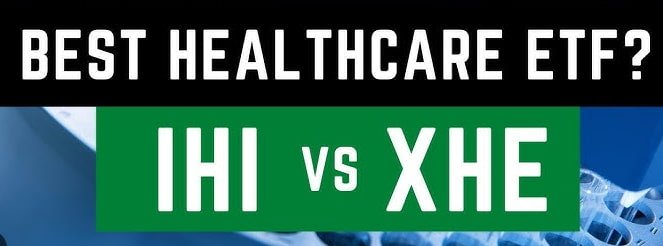
When selecting between Top US Healthcare ETFs, the most common comparison is between the Health Care Select Sector SPDR Fund (XLV) and the Vanguard Health Care ETF (VHT).
XLV is the industry benchmark, focusing specifically on the healthcare companies within the S&P 500, which gives it a heavy weighting toward large-cap giants.
This fund is ideal for international investors who value liquidity and want exposure to household names like Eli Lilly and Abbott Laboratories. Because of its concentration in mature companies, XLV often exhibits lower volatility and provides a very stable dividend yield for those seeking income.
XLV, IYH and VHT Comparison Table for Investors
In contrast, VHT provides a much broader chunked structure by including nearly the entire US healthcare investable universe, from massive conglomerates to small-cap biotech firms.
This allows Canadian investors to capture the growth of emerging companies that are not yet large enough for the S&P 500 but are leading the way in genomic sequencing or specialized surgery.
Both funds boast incredibly low expense ratios, making them highly efficient tools for the cost-conscious European investor. Experts point out that the cost of ownership is often less than 0.10% annually, which is significantly lower than actively managed funds in Canada or the UK.
| ETF Ticker | Market Segment | Number of Holdings | Expense Ratio | Primary Benefit |
| XLV | Large-Cap S&P 500 | ~71 | 0.09% | Maximum Stability & Liquidity |
| VHT | All-Cap US Market | ~410 | 0.10% | Diversification & Innovation Growth |
| IYH | iShares US Healthcare | ~115 | 0.40% | Targeted Sector Exposure |

Navigating Global Risks: Currency & Tax Strategies
For our readers in Canada and Europe, the primary consideration when buying Top US Healthcare ETFs is the impact of currency fluctuations. Since these ETFs are denominated in USD, a strengthening US dollar can provide an extra “return” when converted back to CAD or EUR, but a weakening dollar can erode your market gains.
Many sophisticated investors choose to hold a mix of unhedged and currency-hedged ETFs to mitigate this risk over time.
Taxation is the other critical pillar of cross-border investing, particularly concerning the withholding tax on dividends. For Canadians, holding US-domiciled ETFs in an RRSP (Registered Retirement Savings Plan) is often the most efficient route, as the US-Canada tax treaty waives the 15% withholding tax in these accounts.
European investors, meanwhile, may prefer UCITS-compliant versions of these ETFs listed on European exchanges to simplify their reporting and potentially benefit from local tax efficiencies.
Developing a clear “action plan” for your currency exposure can prevent emotional decisions when the exchange rate moves. We have observed that many investors find success by dollar-cost averaging into their USD positions, which smooths out the entry price for both the stock and the currency.
It is a common concern among international families that they might be “buying at the top” of the USD cycle, but the defensive nature of healthcare provides a margin of safety that other sectors lack.
Tax Optimization: Navigating the Withholding Tax
Strategic placement of US Healthcare ETFs in tax-advantaged accounts like Canada’s RRSP can increase net yields by eliminating unnecessary foreign withholding taxes.
The RRSP advantage for Canadians is one of the most powerful tools for capturing the full dividend yield of Top US Healthcare ETFs. By avoiding the 15% withholding tax, you allow your dividends to compound at their full rate, which can lead to a significantly larger portfolio over several decades.
In contrast, holding these in a TFSA (Tax-Free Savings Account) will still incur the withholding tax, making the RRSP the superior choice for USD-denominated dividend payers.
In Europe, the UCITS framework provides a high level of investor protection and ensures that the ETFs meet specific liquidity and diversification requirements. Many European brokerages make it easy to buy these locally-listed versions, which are often denominated in Euros, saving you the conversion fees at the time of purchase.
It is observed that these “European-wrapped” US ETFs are becoming the standard for sophisticated portfolios across the continent.

Securing Your Wealth Through Medical Innovation
As we look toward the remainder of 2026, the case for a heavy allocation to the healthcare sector remains airtight for the global investor. By leveraging Top US Healthcare ETFs, you are not just making a speculative bet; you are participating in the essential infrastructure of modern life.
These funds offer the perfect “Defensive Play” for Canadian and European portfolios, providing a rare combination of stability, innovation, and long-term demographic support.
Whether you choose the broad reach of VHT or the large-cap focus of XLV, you are aligning your capital with the most resilient economic engine in the world.
The transition from a volatile, growth-heavy portfolio to one anchored by healthcare can feel like a major shift, but it is a necessary evolution for long-term success. We encourage you to take the first step by reviewing your current sector exposure and identifying where a defensive hedge could improve your risk-adjusted returns.

FAQ: Essential Questions on US Healthcare ETFs
Is now a good time to buy Top US Healthcare ETFs in 2026?
Yes, healthcare is considered an “all-weather” sector because its demand is independent of the economic cycle. Experts suggest that given the current global volatility, adding a defensive layer of XLV or VHT can protect your portfolio from the fluctuations seen in more cyclical industries.
How do I choose between XLV and a local Canadian/European equivalent?
While local equivalents are convenient, the US-listed XLV often has much higher liquidity and tighter spreads, which can lower your total cost of entry and exit. However, for those in Canada or Europe who want to avoid the hassle of currency conversion, locally listed “feeder” funds are a perfectly valid and easy-to-manage alternative.
Do these ETFs help with inflation protection?
Absolutely, because healthcare providers and pharmaceutical companies often have the pricing power to pass on increased costs to insurers and patients.
What is the “Silver Tsunami” and how does it affect my investment?
The Silver Tsunami refers to the rapidly aging global population, which is increasing the demand for medical care, surgery, and medications. This creates a massive, long-term growth driver for Top US Healthcare ETFs, as the volume of healthcare consumers is guaranteed to grow for the next several decades.
Can I hold these ETFs in my retirement account without tax issues?
In Canada, holding US-listed ETFs in an RRSP is highly tax-efficient due to treaty exemptions on withholding tax. In Europe, choosing a UCITS-compliant version of the fund ensures you are meeting local regulations while still gaining exposure to the high-growth US medical market.