
Editor’s Pick: For European investors looking to capture the massive growth of the American stock market, UCITS ETFs offer the safest, fully legal and tax-efficient gateway around stringent EU regulations. If you have ever tried to purchase popular American funds on your brokerage account only to see a frustrating restriction notice, you are not alone.
The European Union implemented specific legislative frameworks to protect retail investors, effectively banning direct purchases of standard American exchange-traded products. Fortunately, the financial industry adapted quickly, creating perfectly mirrored, compliant alternatives specifically designed for the European market landscape.
Understanding how to navigate this regulatory environment is absolutely critical for building long-term, cross-border wealth. Many independent investors mistakenly believe they are entirely locked out of Silicon Valley tech booms or the broader S&P 500 index growth. However, by leveraging European-domiciled funds, you can seamlessly replicate the exact same performance metrics without running afoul of local compliance laws.

This guide will walk you through the precise mechanics of these financial instruments, empowering you to confidently construct an internationally diversified portfolio right from your home country.
The PRIIPs Regulation: Blockade on Direct U.S. Investments
The fundamental reason you cannot buy a standard U.S. ETF from Europe is the PRIIPs Regulation, which requires issuers to provide a highly specific, standardized Key Information Document (KID) that American fund managers simply refuse to produce. Introduced in 2018, the Packaged Retail and Insurance-based Investment Products framework was designed to dramatically increase transparency for the everyday retail investor. ESMA mandated that these products explicitly outline risks and fees in a digestible format.
Because the American market operates under entirely different regulatory bodies like the SEC, giant asset managers like Vanguard or BlackRock found it legally cumbersome and financially unviable to draft custom EU-compliant documents for their domestic products. As a direct result, European brokerages had to instantly block retail accounts from purchasing massive tickers like SPY or QQQ to avoid crushing regulatory fines.
This created a massive investment vacuum, leaving European citizens scrambling for viable workarounds to maintain their necessary exposure to the booming U.S. stock market.
To solve this liquidity crisis, institutional managers began launching parallel funds legally registered within European borders, effectively matching the underlying assets of their American counterparts. According to Morningstar data, the European exchange-traded product market has surged past the €1.5 trillion mark, heavily driven by this exact regulatory workaround.

These specialized vehicles operate under the Undertakings for Collective Investment in Transferable Securities directive, which serves as the gold standard for cross-border fund distribution. This framework ensures complete consumer protection while unlocking the borders to global equity participation.
Decoding the Mechanics Behind UCITS Compliance
To achieve UCITS compliance, a fund must strictly adhere to rigorous diversification rules, maintain high liquidity standards, and keep its assets separated through an independent custodian bank to prevent systemic fraud. You cannot simply slap a new label on an existing portfolio; the regulatory hurdles demand structural integrity from the ground up.
For instance, the “5/10/40 rule” prevents dangerous over-concentration, dictating that no single corporate equity can exceed 10% of the fund’s total net asset value, and holdings over 5% cannot collectively surpass 40% of the total portfolio weight.
This meticulous level of asset segregation ensures that even if the underlying fund manager or the issuing company goes completely bankrupt, your hard-earned capital remains entirely safe and legally untouchable.
Furthermore, these funds must offer daily liquidity, meaning you can buy or sell your shares on the open market at any time during standard trading hours without any artificial lock-up periods. (Just like UCITS) These instruments are globally recognized hallmarks of safety, ensuring your financial peace of mind.
Navigating Tax Efficiency with European Domiciles
Choosing the correct geographic domicile for your UCITS ETFs can drastically reduce your dividend withholding tax burden, transforming hidden bureaucratic costs into compounded long-term returns. When an American corporation pays a dividend to a foreign shareholder, the Internal Revenue Service (IRS) automatically levies a hefty 30% withholding tax at the source. If you were somehow able to buy an American fund directly, you would lose nearly a third of your passive income immediately, severely crippling your ability to harness the true mathematical power of compound interest over your investing horizon.
Fortunately, European-domiciled funds legally bypass this severe taxation through established international treaties, offering a vastly superior tax optimization strategy for retail investors. The physical location where the fund is officially registered acts as the legal shield between the American tax authorities and your personal brokerage account. Not all European countries offer the same benefits, however, making the selection of the fund’s home base a critical component of your overall wealth management strategy.
To maximize these specific international benefits, investors must look closely at the ticker symbol and the official prospectus to confirm the precise country of registration. Industry statistics show that over 60% of all European exchange-traded products are intentionally established in highly favorable regions to specifically combat these aggressive withholding taxes.

By understanding how these cross-border taxation agreements function in the background, you essentially guarantee that a much larger portion of your corporate dividends remains directly within your portfolio to be continuously reinvested year after year.
Ireland’s Unbeatable Tax Treaty Advantage
Thanks to an exceptionally favorable bilateral tax treaty with the United States, Irish-domiciled ETFs cut the IRS dividend withholding tax in half, reducing the standard 30% penalty down to a highly manageable 15%. This mathematical advantage makes Dublin the undisputed capital of the European fund industry. When a prominent tech giant like Apple or Microsoft distributes its quarterly profits, the Irish fund structure steps in to legally shield those payments before they are ultimately passed down to the individual retail investor holding the shares.
Over a twenty-year investment timeline, saving 15% on every single dividend payout creates a massive, undeniable snowball effect on your total portfolio valuation. If you compare a standard fund registered in Luxembourg against an identical one registered in Ireland tracking the exact same S&P 500 index, the Irish version will consistently outperform purely due to this optimized tax drag. Financial advisors globally recommend screening for the “IE” prefix in the fund’s International Securities Identification Number (ISIN) as the absolute first step in international asset allocation.
Accumulating vs. Distributing Fund Structures (UCITS)
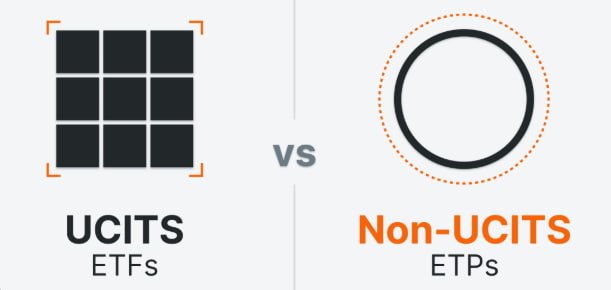
European investors must strategically choose between accumulating funds that automatically reinvest dividends internally, and distributing funds that pay out cash directly, depending on their local domestic tax laws. In an accumulating structure, the fund manager takes the dividend payments received from the underlying companies and immediately buys more shares of those exact same companies without ever passing the cash to your broker. This internal, frictionless reinvestment process completely bypasses the typical trading fees you would incur if you manually reinvested the capital yourself every single quarter.

For many European residents, this compounding mechanism is not just a convenience; it is a highly effective tax deferral mechanism that protects capital growth. In countries where dividend payouts are heavily taxed as immediate income, accumulating funds prevent triggering a taxable event until you explicitly decide to sell the asset years down the line. This allows the money that would have gone straight to the government to stay fully invested in the market, riding the continuous upward trajectory of the global economic cycle.
Conversely, distributing structures are absolutely perfect for retirees or individuals seeking to build a predictable, reliable stream of passive income to cover their ongoing living expenses. Below is a structured breakdown comparing these two primary fund mechanics to help you finalize your portfolio architecture:
| Feature | Accumulating (Acc) | Distributing (Dist) |
| Dividend Action | Reinvested internally by the fund | Paid as cash to your brokerage |
| Tax Implication | Defers taxation in many EU countries | May trigger immediate income tax |
| Best Suited For | Long-term capital growth and compounding | Retirees needing reliable cash flow |
Frequently Asked Questions (FAQ)
Understanding the operational nuances of UCITS ETFs requires addressing the specific, long-tail questions European investors frequently type into search engines when building their cross-border strategies.
Here are the direct, no-nonsense answers to the most critical inquiries we see in the market today:
Can European citizens legally hold US-domiciled ETFs?
Only if you qualify as a “professional investor” with a massive portfolio, or if you acquired them before the PRIIPs regulation took effect; regular retail investors are blocked.
What happens if I move from Europe to another continent?
Your European broker may force you to liquidate your positions or transfer them, but the funds themselves remain perfectly legal to own globally.
Navigating these technicalities ensures your portfolio management strategy remains legally airtight regardless of shifting macroeconomic policies. Let’s look at a few more vital questions:
Are the expense ratios higher for European funds?
Yes, slightly. Due to the added administrative costs of the UCITS framework, you might pay 0.07% annually instead of the 0.03% charged by their American counterparts, but the tax savings heavily outweigh this tiny fee.
Do these funds carry currency risk?
Yes, if the underlying stocks trade in USD but you buy the fund in EUR, fluctuating exchange rates will directly impact your overall returns unless you specifically purchase a strictly “currency-hedged” version.
Taking Control of Your Global Financial Destiny
Transitioning from a restricted local investor to a globally diversified powerhouse is entirely possible once you fully embrace the strategic advantages of the UCITS framework and its tax-efficient mechanisms. You no longer have to sit on the sidelines while the American technological revolution drives unprecedented market highs.
By opening an account with a reputable, modern European brokerage and intentionally filtering your asset searches for these compliant labels, you instantly unlock the exact same wealth-building tools utilized by Wall Street professionals. Your geographic location is no longer a valid excuse for poor diversification.
Now that you understand the powerful mechanics of Irish domiciles, the PRIIPs regulation, and dividend accumulation, it is time to audit your current asset allocation and make the necessary adjustments. Start by logging into your trading platform today, inspecting the ISIN codes of your current holdings, and identifying any tax leaks in your strategy.
Armed with this institutional-grade knowledge, you are fully equipped to navigate the complex waters of international finance, ensuring your hard-earned capital works relentlessly for you around the clock, across every border.