

When most people picture the U.S. Stock Market, they imagine a chaotic room filled with men in suits shouting into telephones, or perhaps complex charts with green and red lines zigzagging across a screen. For the average person, it can feel like an exclusive club where only the wealthy are invited. However, the reality is far less intimidating and much more accessible. At its core, the stock market is simply a marketplace—not so different from a grocery store or a farmers market—where ownership in companies is bought and sold every single day.
Understanding this system is the first step toward financial freedom. The United States is home to the largest and most liquid financial markets in the world, offering unparalleled opportunities for individuals to grow their wealth over time. You don’t need a degree in finance or millions of dollars to participate. You just need to understand the basic mechanics of how the machine operates. Once you peel back the layers of jargon, you will find a logical system driven by people, businesses, and innovation.

In this guide, we are going to strip away the confusion. We will explore what stocks actually are, how the major exchanges operate, and what drives the prices up and down. Whether you are looking to invest your first $100 or simply want to understand the headlines on the evening news, this breakdown of the U.S. Stock Market is your starting line.
What is the U.S. Stock Market, Really?
To understand the market, you first have to understand the “stock.” When a company wants to grow—perhaps to build a new factory, develop a new app, or expand into another country—it needs money. Instead of borrowing that money from a bank and paying interest, they might choose to break their company into millions of tiny little pieces called “shares” and sell them to the public. This process is called an Initial Public Offering (IPO). When you buy a share, you are not just gambling on a ticker symbol; you are buying a legal claim to a fraction of that company’s assets and future profits.
The “stock market” is the overarching term for the infrastructure that allows these shares to be traded after that initial sale. It is the secondary market where investors buy and sell shares among themselves. If you buy a share of Apple today, you aren’t buying it from Apple directly; you are buying it from another investor who decided to sell. The stock market provides the safety, regulation, and technology to ensure that this exchange happens instantly and fairly. It connects buyers and sellers from all over the world, creating a massive web of liquidity.

Think of the U.S. Stock Market as a giant auction house that never stops during business hours. Millions of participants, from massive pension funds to individual investors like you on their smartphones, are constantly shouting out prices they are willing to pay (the “bid”) and prices they are willing to sell for (the “ask”). When those two prices meet, a trade occurs. This continuous auction allows companies to be valued in real-time based on the collective wisdom—and sometimes the collective emotion—of the public.
The Two Giants: NYSE and Nasdaq
While we talk about “the market” as a singular entity, the U.S. system is primarily dominated by two major stock exchanges.
- The first is the New York Stock Exchange (NYSE). Located on Wall Street in New York City, the NYSE is the world’s largest equities-based exchange. It is the home of industrial titans, banks, and established “blue-chip” companies like Coca-Cola, Walmart, and JPMorgan Chase. It represents the history and the traditional bedrock of American capitalism.
- The second giant is the Nasdaq. Unlike the NYSE, which retains a physical trading floor, the Nasdaq is a completely electronic exchange. It historically attracts technology companies and growth-oriented firms. When you think of the modern digital economy—companies like Apple, Google (Alphabet), Microsoft, and Amazon—you are thinking of the Nasdaq.
Together, these two exchanges handle the vast majority of stock trading in the United States, and understanding the difference helps you understand the “personality” of the stocks you are buying.

The New York Stock Exchange (NYSE)
The NYSE is an auction market. In the past, this meant specialists stood at designated posts on the trading floor and matched buyers with sellers. Today, while much of this is automated, there are still human “Designated Market Makers” on the floor who facilitate trading and ensure liquidity. This human element is unique to the NYSE and is part of why it is often seen as a more stable, albeit slightly slower-moving, exchange compared to its digital counterparts.
Companies listed on the NYSE usually have a long history of profitability and stability. The listing requirements—the rules a company must follow to be on the exchange—are strict. This gives investors a certain level of confidence. When you see a company listed here, it signifies that it has reached a significant level of maturity and financial health within the U.S. Stock Market.
The Nasdaq: Us Stock Technology!
The Nasdaq (National Association of Securities Dealers Automated Quotations) operates as a “dealer market.” There is no physical floor; instead, trading takes place through a telecommunications network of dealers. Market makers hold an inventory of stocks and stand ready to buy and sell to investors. Because it was born in the computer age (1971), it naturally became the home for tech startups that grew into global behemoths.
Because of its heavy concentration of technology and biotech stocks, the Nasdaq tends to be more volatile than the NYSE. It is where investors go to find high growth, but it also comes with higher risk. When you hear that “tech stocks are down today,” it is almost always reflected in a drop in the Nasdaq Composite Index.
The Invisible Hand: How Stock Prices Move
The most common question beginners ask is: “Why did the stock price go up?” The answer is theoretically simple but practically complex: Supply and Demand. If more people want to buy a stock (demand) than sell it (supply), the price goes up. If more people want to sell than buy, the price goes down. The stock market is the ultimate democracy where every dollar is a vote. But what influences these votes? Why does the crowd suddenly decide they love Tesla one day and hate it the next?
The primary driver is earnings—or at least, the expectation of earnings. Companies are required to report their profits every three months. If a company makes more money than investors expected, the stock usually jumps. If they make less, it falls. However, the U.S. Stock Market is forward-looking. It doesn’t care about what happened yesterday; it cares about what will happen six months from now. That is why a company can lose money but see its stock price rise if investors believe it will be massive in the future.
Beyond earnings, macroeconomic factors play a huge role. Interest rates set by the Federal Reserve, inflation data, and geopolitical events all shift the mood of the market. When interest rates are low, it is cheap for companies to borrow and grow, which usually boosts stock prices. When rates are high, borrowing costs rise, and stocks often cool down. Understanding these broad currents helps you realize that a stock dropping isn’t always the company’s fault; sometimes, the whole ocean is just pulling back.
Understanding Bull and Bear Markets
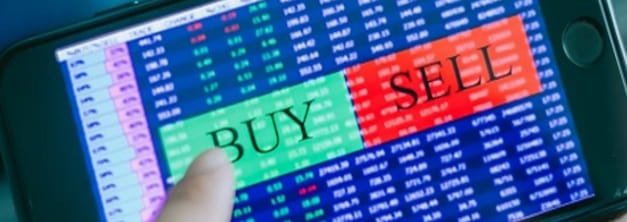
You will often hear the terms “Bull Market” and “Bear Market.”
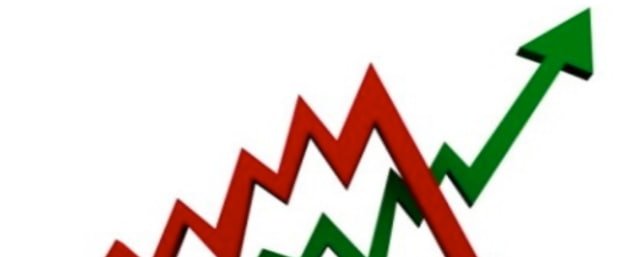
- A Bull Market describes a period where stock prices are rising, confidence is high, and the economy is generally strong. It is called a “bull” because a bull attacks by thrusting its horns upward. In these times, investors are optimistic, and the fear of missing out (FOMO) drives prices even higher.
- Conversely, a Bear Market is when stock prices fall—typically by 20% or more from recent highs—and pessimism reigns. It is called a “bear” because a bear swipes its paws downward to attack. While bear markets are scary, they are a normal part of the U.S. Stock Market cycle. For long-term investors, bear markets are actually seen as “sales,” offering a chance to buy great companies at lower prices.
The Role of Market Sentiment
Sometimes, prices move based on pure psychology. This is called “market sentiment.” Fear and greed are powerful motivators. If a news report comes out about a potential war or a pandemic, fear can cause a massive sell-off, even if the companies themselves are still profitable.
On the flip side, hype can drive prices to unrealistic levels. This creates “bubbles.” Learning to separate the emotional noise from the actual financial value of a company is the hardest skill to master. A disciplined investor looks at the numbers, while an emotional investor looks at the headlines.
Why Invest in the U.S. Market Specifically?
You might wonder why, with markets in London, Tokyo, and Hong Kong, the U.S. remains the center of the financial universe. The answer lies in stability and innovation. The United States has the most transparent financial regulations in the world. The Securities and Exchange Commission (SEC) enforces strict rules to protect investors from fraud. This “rule of law” makes global investors feel safe parking their money in American assets.
Furthermore, the U.S. is the home of innovation. The world’s largest and most influential companies—Apple, Microsoft, Amazon, Nvidia—are American. When you invest in the U.S. Stock Market, you are effectively betting on the engine of global technological progress. The diversity is also unmatched; you can buy shares in everything from massive agricultural firms in the Midwest to cutting-edge biotech labs in Boston.
Finally, there is liquidity. Because the market is so huge, you can almost always find a buyer for your shares. In smaller, developing markets, you might want to sell a stock but find there is nobody buying, forcing you to lower the price. In the U.S., the sheer volume of trade ensures that you can enter and exit positions instantly, which is a crucial safety mechanism for any investor.

Getting Started: From Observation to Action
Decades ago, buying a stock required calling a broker on the phone and paying a hefty commission fee of $50 or $100. Today, the barrier to entry is zero. Apps like Robinhood, E-TRADE, and Fidelity allow you to open an account in minutes and buy stocks with $0 commission. You can even buy “fractional shares.” If a single share of a company costs $3,000, you can choose to invest just $50 and own a tiny sliver of it.
The best strategy for a beginner is usually not to pick individual stocks, but to buy an Exchange Traded Fund (ETF). An ETF is a basket of stocks that trades like a single share. For example, you can buy an ETF that tracks the S&P 500. By buying one share of that ETF, you instantly own a tiny piece of the 500 biggest companies in America. This provides instant diversification, protecting you if one specific company fails.
Consistency is key. The U.S. Stock Market has historically returned about 10% per year on average over the last century. It doesn’t go up every year—some years it crashes—but over the long term, it has been the greatest wealth-generating machine in history. The trick is to start early, contribute often, and ignore the daily noise.

Conclusion: U.S. Stock Market is an Opportunity!
The U.S. Stock Market is not a casino, and it is not a magical get-rich-quick scheme. It is a sophisticated, historical system designed to allocate capital to the companies that can use it best. It connects your savings to the real economy, allowing your money to grow alongside the businesses that build our cars, program our phones, and deliver our food.
While the flashing numbers and financial jargon can be overwhelming at first, the underlying principles are simple. Companies need money to grow, and you get a reward for providing that money. By understanding the roles of the exchanges, the drivers of price, and the power of long-term holding, you are no longer an outsider looking in. You are a participant in the global economy.