

Editor’s Pick: Understanding 401(k) and IRA basics is absolutely essential for European expats looking to secure their financial future while working in the dynamic United States economy. Moving across the Atlantic brings exciting career opportunities but it also introduces a completely foreign landscape of personal finance and wealth accumulation.
Unlike the robust, state-sponsored pension systems prevalent across much of Europe, the American retirement framework places the primary burden of saving directly on the individual worker. This stark transition can feel incredibly overwhelming, but mastering these investment vehicles is your ultimate key to long-term prosperity.
Taking immediate action to set up a tax-advantaged retirement account allows you to leverage the immense power of compound interest during your time in America. Many expatriates mistakenly delay investing because they are unsure if they will permanently remain in the United States, leaving substantial amounts of free money on the table.
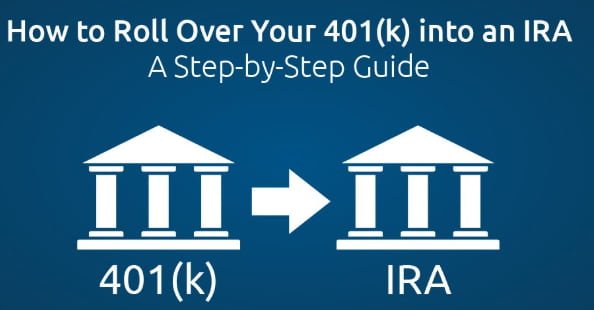
By strategically utilizing a workplace retirement plan alongside individual accounts, you can build a highly portable, globally resilient portfolio.
Decoding the American Retirement System for Expats
The foundational difference in the US system is that your retirement lifestyle depends heavily on voluntary contributions to private market accounts like the 401(k) plan, rather than government guarantees. In Europe, high tax rates often fund comprehensive social safety nets that provide a predictable income during your golden years without active market participation.
However, in the United States, the Social Security administration offers only a minimal baseline of support, making aggressive personal investing mandatory for maintaining your standard of living. This structural shift requires expats to adopt a much more proactive, market-driven financial mindset to succeed.
A 401(k) is an employer-sponsored retirement savings vehicle that allows employees to automatically divert a portion of their pre-tax paycheck directly into an investment portfolio. Financial experts at leading global wealth management firms consistently highlight that the primary advantage of this system is its seamless automation and significant tax benefits.
By reducing your taxable income in the current year, you effectively lower your immediate US tax burden while your investments grow tax-deferred over decades. This creates a highly efficient wealth accumulation engine that mathematically outperforms standard taxable brokerage accounts over a long investing horizon.

Investment Returns and 401(k)
Navigating the specific investment options within these employer-sponsored plans can be daunting, as they typically offer a curated menu of mutual funds and target-date funds. As a European investor, you must carefully evaluate the expense ratios of these funds, as exorbitant administrative fees can silently erode your long-term investment returns.
Opting for low-cost, broad-market index funds within your plan usually provides the best balance of robust growth and manageable risk. Taking the dedicated time to optimize your asset allocation ensures your hard-earned US dollars are working efficiently for your global future.
The Mechanics of the 401(k) Employer Match
An employer match represents guaranteed, free money added to your retirement account by your company, making it the most critical benefit you must maximize immediately. For example, a company might generously offer a 100% match on the first 5% of your salary that you actively contribute to the plan. If you fail to contribute at least that 5% threshold, you are actively forfeiting a portion of your total negotiated compensation package.
Financial advisors universally agree that capturing the full employer match should be every expat worker’s absolute first priority in personal finance.
Understanding the vesting schedule attached to this matching contribution is equally important for expats who might not stay with one American employer long-term. Vesting mathematically dictates how much of the employer’s contributed money you actually legally own if you decide to leave the company or return to Europe.
Some companies offer immediate vesting, while others use a graded schedule that requires you to remain employed for three to five years to keep the full match. Always carefully review your HR documentation to strategically plan your career moves around these lucrative retirement benefits.
Traditional vs. Roth Contributions Explained
Deciding between a Traditional 401(k) and a Roth 401(k) fundamentally comes down to whether you want to pay income taxes now or during your retirement years abroad. Traditional contributions are made with pre-tax dollars, providing an immediate tax deduction, but your future withdrawals will be fully taxed as ordinary income.
This route is typically ideal for high-earning expats who currently reside in high-tax states like California or New York and expect to be in a significantly lower tax bracket when they eventually retire, perhaps settling down in a European country.
Conversely, Roth contributions are funded with after-tax money, meaning you receive zero tax break today, but all future market growth and withdrawals are entirely tax-free. This specific strategy is highly favored by younger professionals or those currently in lower tax brackets who anticipate their wealth and global tax rates will increase significantly over time.
It is crucially important to consult a cross-border tax specialist, as not all European nations formally recognize the tax-free status of a Roth account under their local tax codes upon your potential transatlantic repatriation.

Navigating Individual Retirement Accounts (IRAs)
An Individual Retirement Account (IRA) provides a powerful, supplemental investment vehicle outside of your employer’s plan, granting you complete control over your asset selection. While a 401(k) restricts you to a limited menu of institutional funds, an IRA can be opened at any major commercial brokerage, allowing you to invest directly in individual stocks, ETFs and even real estate.
For expats working as independent contractors or for smaller boutique companies without a workplace plan, the IRA becomes the absolute essential cornerstone of their American retirement strategy.
There are strict annual contribution limits imposed by the Internal Revenue Service (IRS) for these individual accounts, which currently sit significantly lower than maximum 401(k) limits. Despite the lower cap, maximizing an IRA is a mathematically sound strategy to diversify your tax liability and aggressively expand your investment portfolio.
Right Brokerage and Tax-Advantaged Accounts
Choosing the right brokerage firm to host your IRA is a critical operational step for an expatriate actively managing a global financial footprint. You must meticulously select financial institutions that possess expat-friendly compliance policies, as some domestic brokerages will forcibly liquidate your accounts if you update your primary address to a European country.
Firms with strong international capabilities will allow you to maintain your tax-advantaged accounts and continue trading even after you leave the United States, seamlessly preserving your hard-earned American wealth across international borders.

IRA Income Limits and Tax Deductions
High-income earners must carefully navigate IRS income phase-out limits, which can restrict or completely eliminate the ability to deduct Traditional IRA contributions from their current taxes. If you or your spouse are actively covered by a workplace retirement plan, your ability to claim this lucrative tax deduction progressively decreases as your Modified Adjusted Gross Income (MAGI) rises.
Expats who incorrectly assume all IRA contributions are automatically tax-deductible often face unexpected liabilities during tax season. Verifying your exact eligibility with a certified public accountant effectively prevents costly tax planning errors.
Even if your income completely prevents you from taking the upfront tax deduction, you are still legally permitted to make non-deductible contributions to a Traditional IRA. While this might seem somewhat unappealing at first glance, the capital inside the account still benefits from tax-deferred compounding growth year over year.
More importantly, making these non-deductible contributions is the mandatory foundational step for executing advanced financial maneuvers that bypass standard income restrictions entirely. This strategic foresight definitively separates average everyday savers from those executing top-tier wealth management techniques.
The Backdoor Roth IRA Strategy
The Backdoor Roth IRA is a completely legal, highly effective financial loophole that allows high-income expats to fund a Roth IRA despite exceeding the standard IRS income limits. To flawlessly execute this strategy, an investor first makes a non-deductible contribution to a Traditional IRA and then immediately converts those funds into a Roth IRA.
Because the initial contribution was strictly made with after-tax dollars and hasn’t yet generated market earnings, the conversion event typically triggers little to no additional tax liability. This secures your permanent access to tax-free growth.
However, expats must be acutely aware of the IRS “Pro-Rata Rule” before attempting this conversion, as existing pre-tax IRA balances can severely complicate the necessary tax math. If you hold other Traditional IRAs filled with untaxed funds, the IRS forces you to calculate the conversion proportionally, potentially generating an unexpected and exceptionally hefty tax bill.
Cross-Border Tax Treaties and Repatriation Risks
Understanding the intricacies of dual taxation agreements between the US and your European home country is vital to protect your retirement savings from being unfairly taxed twice upon repatriation. The United States has successfully established comprehensive tax treaties with many major European nations, including the UK, Germany, and France, designed specifically to recognize and legally protect standard retirement accounts.
These robust treaties generally ensure that your 401(k) and IRA distributions will be taxed primarily in your country of residence when you retire, avoiding punitive double taxation on your passive income.
Despite these protective treaties, severe financial pitfalls remain if you attempt to withdraw your funds before reaching the official US retirement age of 59½. The IRS rigidly imposes a strict 10% early withdrawal penalty, in addition to standard income taxes, regardless of where in the world you currently reside.
Many expats mistakenly cash out their entire 401(k) portfolio when they move back to Europe, instantly destroying years of compound interest and triggering massive tax bills. The most prudent financial strategy is almost always leaving the funds invested in the US market until retirement.
Retirement Account Type and Tax Status Table!
To provide maximum clarity on how different accounts are typically treated when crossing international borders, we must outline the general rules of engagement. Managing a transatlantic portfolio requires you to understand the following key principles before making any massive geographical transitions:
- Never withdraw funds early unless facing a severe financial emergency.
- Always file your W-8BEN form to claim treaty benefits as a non-resident alien.
- Consult local European tax authorities regarding the specific recognition of Roth accounts.
This structured table below further outlines the general tax behavior of American retirement vehicles when an expat relocates to a treaty-partner nation, guaranteeing optimal international wealth preservation.
| Retirement Account Type | US Tax Status Before Age 59½ | European Tax Treatment Upon Repatriation (General Treaty) |
| Traditional 401(k) | High Penalties & Fully Taxed | Usually recognized; taxed as regular income upon withdrawal. |
| Roth 401(k) / Roth IRA | Contributions penalty-free; earnings penalized. | Varies greatly; some nations tax the “tax-free” growth. |
| Traditional IRA | High Penalties & Fully Taxed | Widely recognized; distributions taxed based on local rates. |
| Taxable Brokerage | Capital Gains Tax Applied | Subject to local capital gains and potential wealth taxes. |
Frequently Asked Questions (FAQ): Expat Retirement
Addressing the most common concerns regarding 401(k) and IRA basics helps European expats confidently navigate the complexities of the American financial system without fear of regulatory missteps.
Can I legally keep my US retirement accounts if I permanently move back to Europe?
Yes, you can absolutely keep your accounts open and fully invested in the American stock market. However, you will likely not be able to make further contributions once you stop earning US-sourced income, but your existing investment portfolio will continue to compound tax-efficiently.
What exactly happens to my employer match if I leave my US job after only two years?
This outcome is entirely dependent on your company’s specific vesting schedule. If your employer utilizes a strict three-year “cliff vesting” schedule, leaving at the two-year mark means you permanently forfeit 100% of the matching funds, though you always keep your own contributions.
Always check your HR portal to understand these timelines, as timing your resignation by just a few weeks can significantly impact your final net worth.
Do I have to actively report my US retirement accounts to my European tax authority?
The answer is almost universally yes, as modern global banking regulations strictly enforce international transparency. Under the Common Reporting Standard (CRS) and the Foreign Account Tax Compliance Act (FATCA), financial data is routinely shared across international borders.
While tax treaties usually protect your accounts from immediate double taxation, failing to properly declare these assets can trigger severe financial penalties in your home country, fundamentally undermining your entire tax planning strategy.