
Investor Pick: The core difference in the VWO vs. IEMG debate is that IEMG classifies South Korea as an emerging market and includes it in its holdings, whereas VWO considers it a developed nation and entirely excludes it. Consequently, investors seeking maximum geographic breadth often lean toward the iShares product, while those prioritizing rock-bottom expense ratios typically favor the Vanguard offering.
Both funds provide excellent, low-cost liquidity, but this fundamental variance in index tracking directly alters your exposure to major technology conglomerates and East Asian economic cycles.
When diversifying a robust portfolio, North American investors often find themselves debating the structural merits of Vanguard FTSE Emerging Markets ETF (VWO) against the iShares Core MSCI Emerging Markets ETF (IEMG). Allocating capital outside of domestic equities is widely considered a foundational step for capturing global economic growth and hedging against localized stagnation.
However, navigating the intricate landscape of developing economies requires more than just picking a random international ticker. Experts generally observe that selecting the right emerging market index fund heavily dictates your long-term geopolitical risk exposure and overall return potential.
Investor’s Comment
Throughout my years of analyzing international equities, I have frequently noticed that retail investors misunderstand what they actually own when they purchase a broad international ETF. Relying simply on the phrase “emerging markets” creates a false sense of uniform diversification.
In reality, these funds are heavily concentrated in specific geopolitical zones, and ignoring these concentrations can dramatically skew a supposedly balanced portfolio. When I review asset allocations, the VWO vs. IEMG decision is always a critical pivot point because it forces an investor to consciously decide their stance on East Asian market dominance.
VWO vs. IEMG Index Methodologies:
The foundational architecture separating these two financial titans stems entirely from the specific benchmark indexes they are mandated to track. The Vanguard FTSE Emerging Markets ETF (VWO) mirrors the FTSE Emerging Markets All Cap China A Inclusion Index. This specific methodology is highly significant because the FTSE Russell classification system formally upgraded South Korea to developed status years ago.
Consequently, holding this Vanguard fund means your capital is entirely insulated from South Korean market movements, which heavily concentrates the remaining assets into other dominant developing nations.
Conversely, the iShares Core MSCI Emerging Markets ETF (IEMG) strictly follows the MSCI Emerging Markets Investable Market Index. The MSCI classification committee continues to categorize South Korea as an emerging market, largely due to specific accessibility constraints regarding their currency trading and foreign investor registration rules.
Because of this structural discrepancy, the iShares ETF allocates a substantial portion of its total weight to South Korean equities. Financial advisors frequently point out that this single methodological difference drastically alters the technological and industrial footprint of your international exposure.

Market Capitalization and Global Portfolios
Understanding these tracking differences provides vital context for exactly how and why your international assets fluctuate during global market cycles. When global semiconductor demand surges, the inclusion of South Korean tech giants in the MSCI index often allows the iShares product to capture momentum that the FTSE index misses.
However, this inclusion also dilutes exposure to rapidly growing economies like India and Brazil, which receive slightly heavier weightings in the Vanguard alternative. Ultimately, mastering this market capitalization variance is essential for constructing a truly optimized, non-overlapping global portfolio.
South Korea Allocation: The Defining Factor for IEMG
The inclusion of South Korea within IEMG is not merely a geographic footnote; it introduces heavy exposure to world-class electronics and semiconductor manufacturing. Companies like Samsung Electronics command massive market capitalizations, directly injecting a heavy technology sector bias into the fund’s overall performance.
For North American investors, this provides an excellent growth engine, as these corporations are deeply embedded in the global digital supply chain. Experts generally agree that holding these international equities provides a robust buffer against localized economic slowdowns within purely domestic markets.
However, this precise technological concentration also introduces specific cyclical vulnerabilities that investors must carefully monitor. The South Korean economy is heavily export-driven, meaning its equity markets are highly sensitive to global trade tariffs and currency fluctuations. If you are deliberately seeking to avoid East Asian technology cycles—perhaps because you already hold massive domestic tech exposure—this structural inclusion might disrupt your portfolio diversification goals.
Therefore, it is highly recommended to audit your existing international holdings to ensure you are not inadvertently doubling down on this specific economic sector.
Cost Efficiency and Liquidity: VWO
In the realm of passive index investing, minimizing annual management fees is widely considered the most reliable method for improving long-term net returns. When comparing the expense ratio of these two funds, both institutions offer incredibly competitive pricing that ranks among the lowest in the industry.
The VWO ETF typically operates with a slight edge in absolute cost efficiency, making it highly attractive for extreme fee-minimization strategies. Over a multi-decade investing horizon, preserving even a few basis points can compound into thousands of dollars of retained wealth.
Despite the minor gap in management fees, both funds boast massive assets under management (AUM), ensuring exceptional secondary market liquidity for retail and institutional traders alike. This high liquidity translates directly into incredibly tight bid-ask spreads, which effectively reduces the hidden costs of entering or exiting a position.
Whether you are executing a lump-sum investment or dollar-cost averaging into your brokerage account every month, the execution friction for both of these instruments is virtually nonexistent. This structural stability is exactly why they dominate the international investing landscape.
VWO Features and Metrics Table
To properly visualize the structural discrepancies between these two financial vehicles, wealth managers analyze a few core metrics:
- Underlying index providers and their distinct classification rules.
- Total management fees deducted annually.
- Geographic country exclusions, specifically regarding East Asia.The structured table below highlights these critical data points to help you make a final allocation decision. By examining their respective tracking benchmarks, you can clearly identify which emerging market fund seamlessly aligns with your specific risk tolerance.
| Feature / Metric | Vanguard Emerging Markets (VWO) | iShares Core Emerging Markets (IEMG) |
| Underlying Index Tracked | FTSE Emerging Markets All Cap | MSCI Emerging Markets IMI |
| South Korea Classification | Excluded (Viewed as Developed) | Included (Viewed as Emerging) |
| Primary Sector Focus | Financials & Materials | Information Technology & Financials |
| Relative Expense Tier | Ultra-Low Cost | Highly Competitive / Low Cost |
| Ideal Portfolio Pairing | Best paired with FTSE Developed funds | Best paired with MSCI Developed funds |
Geopolitical Risk Management: Navigating China Exposure
Beyond the South Korea debate, managing the immense weight of Chinese equities remains a primary concern when evaluating any broad emerging markets index. Both funds dedicate their largest single-country allocation to China, exposing investors to the unique regulatory and geopolitical risks inherent in that specific market. Sudden governmental interventions in the technology or real estate sectors have historically triggered significant volatility across both ETFs.
Consequently, financial experts suggest treating this heavy China allocation as a high-risk, high-reward component of your broader wealth accumulation strategy.
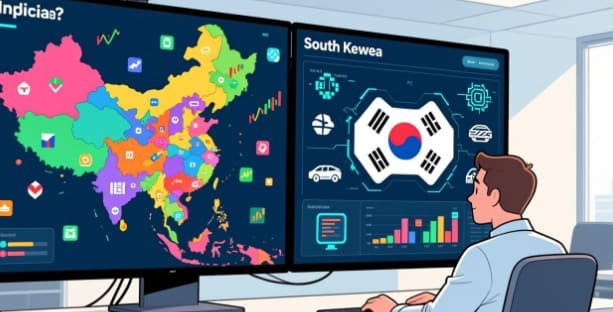
The slight difference in how the FTSE and MSCI indexes cap or include specific shares of Chinese corporations creates minor variations in their overall volatility. Because VWO excludes South Korea, the relative weight of China naturally expands within its portfolio, potentially amplifying geopolitical headwinds. Conversely, the broader geographic dispersion found in IEMG slightly dilutes this concentrated country risk.
Understanding this dynamic is crucial for North American investors who wish to strictly control their exposure to foreign regulatory turbulence without completely abandoning developing markets.
Strategic Asset Placement: Integrating
When structuring a comprehensive retirement or brokerage account, selecting between these funds requires a holistic view of your current global equities. If your domestic and developed international holdings are already heavily weighted toward the technology sector, adding an emerging markets ETF that excludes East Asian tech giants might actually improve your diversification.
Conversely, if you lack exposure to semiconductor manufacturing and digital supply chains, prioritizing a fund with a broader Asian footprint becomes mathematically advantageous for capturing global growth.
It is highly recommended by wealth managers to strictly audit your existing international exposure before purchasing either of these assets. For instance, if you currently hold a developed market fund tracking MSCI indexes, it intentionally excludes South Korea.
In this scenario, purchasing the Vanguard fund (which also excludes South Korea) would create a complete blind spot in your global coverage.

Portfolio Diversification and Asset Allocation
Achieving true portfolio diversification means ensuring your underlying index methodologies perfectly interlock without leaving massive geographic gaps in your wealth strategy.
Establishing a durable financial future means deliberately choosing investment vehicles that you can confidently hold through severe global market cycles. Whether you prioritize the absolute lowest fees provided by Vanguard or the comprehensive inclusion offered by iShares, maintaining a consistent asset allocation strategy is paramount.
It is generally observed that investors who select a benchmark and strictly adhere to it historically out-perform those who constantly tinker with their allocations based on short-term geopolitical headlines.
Final Execution: Finalizing Your Emerging Market Allocation
Taking decisive action on your international portfolio requires stepping back and permanently assigning a distinct role to your chosen asset. By deliberately treating this allocation as a long-term anchor rather than a short-term trading vehicle, you naturally insulate your psychology against the inherent volatility of developing nations.
Lock in your strategy today by reviewing your primary brokerage accounts, identifying any structural index overlaps, and confidently deploying your capital into the fund that seamlessly completes your global financial puzzle.
As you finalize this crucial portfolio decision, remember that capturing the growth potential of developing economies is a multi-decade endeavor. Resist the urge to constantly switch between these two financial titans based on temporary performance discrepancies or annual fee adjustments.
Focus exclusively on maintaining your predetermined geographic weightings, reinvesting your dividends, and allowing the compounding mechanics of global capitalism to quietly construct your enduring financial independence over the coming decades.
Frequently Asked Questions (FAQ)
Why does VWO exclude South Korea while IEMG includes it?
This discrepancy exists because the funds track entirely different index providers that hold conflicting definitions of global economic development. VWO tracks a FTSE index, which officially upgraded South Korea to a “developed” nation status, thereby removing it from the emerging market classification.
Which fund is better for avoiding heavy geopolitical concentration in China?
While both funds hold China as their largest single geographic allocation, IEMG generally offers slightly better dilution of this specific geopolitical risk.
Can I hold both VWO and IEMG in the same investment portfolio?
While technically possible, holding both of these funds simultaneously is highly discouraged by financial advisors because it creates severe, unintended asset overlap.