
Editor’s Note: The true battle for enterprise computing dominance is expanding far beyond standard graphical architectures, positioning AMD and Intel as the foundational pillars for the next generation of AI chips. In the subejct of AMD vs. Intel rivalry (beyond NVIDIA), the artificial intelligence revolution is no longer a single-player environment dominated solely by extreme-scale training hardware.
As sophisticated intelligence models mature and permeate edge devices alongside enterprise data centers, the necessity for versatile and cost-effective computing is reshaping the semiconductor supply chain. Observers and technologists are witnessing a profound structural shift in how complex silicon is designed, manufactured, and deployed for everyday machine learning workloads.
Exploring this dynamic landscape reveals a vast, uncharted blue ocean of technological innovation rather than a simple zero-sum rivalry between legacy entities. The transition from pure large language model training to continuous AI inference requires highly sophisticated neural processing units and agile x86 architecture adaptations.
By examining the strategic maneuvers of both established giants, a much clearer picture emerges of how global technology infrastructure will organically evolve.
This analysis explores the underlying mechanics and market realities of the semiconductor fabrication space, illuminating the subtle yet powerful forces driving the next vast wave of technological expansion.
Shifting Silicon Games: Beyond Pure Graphical Processing
The global technology ecosystem is rapidly recognizing that scalable AI deployment requires diverse compute engines, shifting the focus toward integrated CPU, GPU, and NPU architectures where AMD vs. Intel becomes the central narrative. While massive parallel processing units have captured the initial headlines for training foundational models, the day-to-day operationalization of artificial intelligence demands a different breed of silicon.
Enterprises running generative AI infrastructure require systems that offer energy efficiency, seamless legacy integration, and cost predictability. This distinct requirement creates a fertile environment for holistic platform providers to establish deep, long-lasting roots in the corporate data center ecosystem.
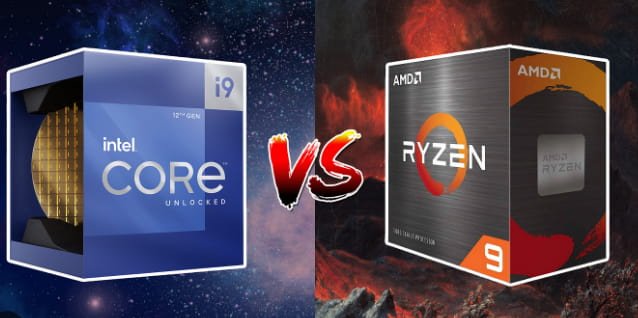
The concept of ubiquitous artificial intelligence suggests a future where computational intelligence is not siloed in isolated supercomputers but distributed across the entire network edge and core servers.
This paradigm shift emphasizes the critical importance of adaptable server processors capable of managing complex data pipelines before they even reach specialized accelerators.
Consequently, the industry is witnessing a renaissance in core processor design, with a strong emphasis on integrating dedicated AI acceleration blocks directly onto the primary silicon die, reducing latency and overall power consumption.
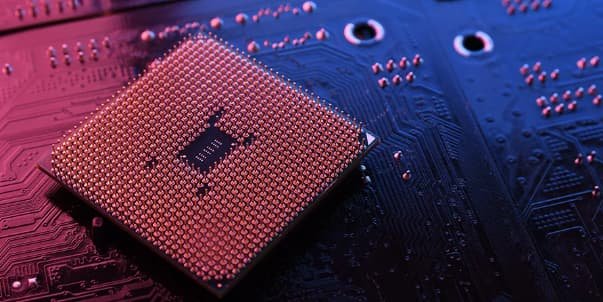
Machline Learning: AMD vs. Intel Rivalry
Within this evolving architecture, the strategic maneuvers of long-standing processor rivals become deeply significant for the future of enterprise technology. Both companies are not merely reacting to the AI wave; they are fundamentally re-architecting their entire product roadmaps to capture the lucrative machine learning inference market.
By prioritizing heterogeneous computing platforms, these organizations are laying the groundwork for a future where intelligent processing is an ambient, native capability of all enterprise hardware, rather than an expensive, specialized add-on.
Redefining Compute Architecture for the Enterprise
Enterprise IT strategies are increasingly prioritizing heterogeneous computing, meaning the seamless integration of diverse processing units is becoming the gold standard for robust data center growth. The synergy between central processing units and specialized accelerators allows organizations to optimize their hardware investments across a much broader spectrum of workloads.
Instead of relying on a monolithic approach, modern server architectures distribute tasks dynamically to the most efficient processing core, dramatically improving both performance and operational economics for large-scale deployments.
This architectural redefinition also heavily impacts how software developers approach building the next wave of intelligent applications. The availability of standardized toolkits that can easily target these diverse compute engines across different silicon architectures lowers the barrier to entry for AI integration.
As a result, the enterprise ecosystem is rapidly moving toward a unified software-hardware abstraction layer, cementing the importance of foundational hardware platforms that offer comprehensive and highly optimized developer environments.
AMD Advantage: Agile Design and Strategic Mergers
Advanced Micro Devices has successfully cultivated a highly agile product strategy through its mastery of chiplet design and the critical integration of adaptive silicon technologies. The acquisition of Xilinx has provided the organization with unparalleled expertise in field-programmable gate arrays (FPGAs) and adaptive system-on-chips.
This strategic capability allows the engineering teams to rapidly iterate and customize silicon solutions for highly specific generative AI infrastructure requirements.
The modular chiplet approach essentially democratizes high-performance processor design, enabling faster time-to-market and significantly improved yields compared to traditional monolithic silicon manufacturing.
Furthermore, the aggressive deployment of the MI300 series accelerators demonstrates a profound understanding of the critical bottlenecks in modern machine learning. By massively increasing memory bandwidth and creating tightly coupled CPU-GPU architectures, the product lines directly address the most severe latency issues plaguing large-scale model inference.
This engineering philosophy prioritizes continuous data flow and memory proximity, which are absolutely essential for real-time artificial intelligence applications functioning at an enterprise scale.
Server Processors Segment and AI
The sustained market share expansion in the server processors segment provides a robust financial and strategic foundation for these ambitious AI initiatives. The widespread adoption of EPYC processors in major cloud hyperscalers creates a natural, frictionless pathway for the introduction of accompanying AI accelerators.
This holistic ecosystem approach ensures that the organization is not merely selling individual components, but rather deeply integrating its core technologies into the fundamental fabric of the modern internet infrastructure.
Execution Without Fabrication: The Fabless Agility
Maintaining a strict fabless operational model allows the organization to leverage the absolute cutting-edge manufacturing nodes of pure-play foundries like TSMC without the massive capital expenditure. This deliberate separation of design and manufacturing provides extraordinary agility within the volatile semiconductor supply chain.
By focusing entirely on architectural innovation rather than the physical chemistry of chipmaking, the engineering teams can pivot rapidly to new node technologies as soon as they become commercially viable, ensuring consistent technological leadership in product specifications.
This model also intrinsically insulates the corporate balance sheet from the cyclical, capital-intensive risks traditionally associated with operating advanced fabrication plants. In an era where building a leading-edge foundry requires tens of billions of dollars and years of lead time, the fabless strategy offers unparalleled financial flexibility.
This liquidity allows for sustained, aggressive investments in software ecosystem development, which remains the ultimate battleground for long-term artificial intelligence platform dominance.
Intel’s Sleeping Giant: Foundry Ambition and Ubiquity
The execution of the IDM 2.0 strategy represents a monumental pivot aimed at reclaiming global manufacturing leadership while simultaneously pushing AI capabilities into every tier of computing. By aggressively expanding its internal fabrication plants and opening them to external customers, the organization is attempting to reshape the geopolitical realities of silicon production.
This dual-pronged approach—designing leading processors while also manufacturing for others—creates a unique, albeit complex, value proposition in an industry heavily reliant on geographically concentrated supply chains.
The introduction and steady refinement of the Gaudi accelerator line highlight a clear strategy to democratize artificial intelligence through highly cost-effective, easily scalable hardware.
Rather than competing solely on absolute peak performance metrics, the focus is placed heavily on the total cost of ownership and seamless Ethernet-based scaling for enterprise clusters.
This pragmatic approach appeals deeply to organizations looking to deploy robust machine learning inference capabilities without incurring the astronomical costs associated with premium-tier, highly constrained graphical processing units.
AMD vs. Intel Comparison Table for Beginners!
To comprehend the full scope of this strategic divergence, a clear structural overview of the current market positioning is highly beneficial for market observers.
- Strategic Focus: End-to-end supply chain control versus fabless agility.
- AI Architecture: Cost-optimized accelerator clusters versus massive memory bandwidth chiplets.
- Market Penetration: Ubiquitous edge computing versus targeted high-performance cloud nodes.
| Strategic Pillar | AMD Strategy | Intel Strategy |
| Manufacturing | 100% Fabless (TSMC Reliance) | IDM 2.0 (Internal & Foundry) |
| AI Accelerator | MI300 Series (High Bandwidth) | Gaudi Series (Cost/Ethernet Scaling) |
| Core Focus | Chiplet architecture dominance | Ubiquitous AI & Advanced Packaging |
Advanced Packaging as a Differentiator
The utilization of highly advanced 3D packaging technologies serves as a critical differentiator in bridging the performance gap in complex silicon assemblies. Technologies such as Foveros allow engineering teams to stack disparate compute tiles vertically, dramatically reducing the physical footprint while massively increasing interconnect speeds between distinct functional blocks.
This mastery of spatial silicon arrangements is essential for creating the next generation of unified processors that combine CPUs, GPUs, and high-speed memory into a single, cohesive entity.
This capability is particularly crucial for developing deeply integrated neural processing units that require immediate access to system memory and logic cores. By controlling the entire physical construction of the package, the organization can optimize thermal dynamics and power delivery at a microscopic level.
This vertical integration of the packaging process provides a distinct physical advantage in creating highly dense, extremely efficient compute nodes for both mobile devices and dense data center racks.
Frequently Asked Questions: Decoding AI Chip Rivalry
Understanding the intricate dynamics of the next generation of AI chips requires examining the specific, long-tail questions that industry analysts and technologists frequently evaluate.
How does the evolving AMD vs. Intel rivalry impact the broader AI market?
This competition fundamentally democratizes access to artificial intelligence by driving down the total cost of compute.
As both entities innovate across different vectors—such as chiplet design and advanced packaging—enterprises gain access to a wider variety of specialized silicon, reducing reliance on single-vendor ecosystems and accelerating overall technological adoption.
What is the true significance of Neural Processing Units (NPUs) in this landscape?
NPUs represent the localization of artificial intelligence. While massive data centers handle the training of complex models, NPUs allow smartphones, laptops, and edge devices to execute machine learning inference tasks locally.
This dramatically reduces latency, enhances user privacy, and conserves network bandwidth, making AI an ambient, ubiquitous feature rather than a distant cloud service.
Can the integrated foundry model successfully compete with the fabless approach?
The IDM 2.0 strategy offers distinct geopolitical and supply chain security advantages by domesticating silicon wafers production. However, it requires immense capital expenditure and flawless execution in manufacturing node transitions.
Conversely, the fabless model provides extreme agility and financial flexibility. The success of either model ultimately depends on consistent execution and the ability to foster robust, developer-friendly software ecosystems around their respective hardware architectures.
Navigating Your Portfolio Through the Silicon Horizon
The fundamental architecture of global computing is undergoing a structural evolution that transcends simple product cycles, offering a vast landscape of strategic opportunities. The expansion of artificial intelligence from a specialized data center application into a ubiquitous fabric of daily technology necessitates a profound diversification of processing hardware.
The subtle, yet massive shifts in how semiconductor fabrication and architectural design are executed reveal a complex, multifaceted ecosystem maturing far beyond the initial hype phase of generative tools.
Observing these tectonic shifts provides a clear vantage point for understanding the future trajectory of digital infrastructure and enterprise capability. The continued refinement of hybrid processing environments and localized intelligence represents the true, sustainable frontier of the technological revolution.
As these platforms quietly establish the foundational mechanics of the future, the global market steadily transitions toward a profoundly interconnected, naturally intelligent digital ocean.