If you’ve been anywhere near the stock market in the last couple of years, you know that Nvidia ($NVDA) isn’t just a company; it’s a cultural and financial phenomenon. Once known primarily by gamers for its high-end graphics cards, Nvidia has transformed into the undisputed heart of the artificial intelligence revolution. Every major tech giant—from Microsoft, Apple to Meta—is lining up to spend billions on Nvidia’s H100 and Blackwell chips. But as the stock price reaches levels that make even seasoned bulls do a double-take, the question on every investor’s mind is: “Is there still room to buy Nvidia stock, or are we witnessing the greatest bubble of our time?”
Investing in Nvidia today feels like a tug-of-war between FOMO (Fear Of Missing Out) and the cold, hard numbers of fundamental analysis. On one hand, the company is posting triple-digit revenue growth that we’ve rarely seen in the history of mega-cap stocks. On the other hand, a trillion-dollar valuation carries an immense weight of expectation. If Nvidia misses an earnings target by even a fraction, or if the “AI hype” cools down, the pullback could be aggressive. This isn’t just about chips anymore; it’s about whether the global economy is truly ready to be rebuilt on a foundation of silicon and neural networks.
In this analysis, we are going to look past the headlines. We’ll break down the specific segments driving Nvidia’s growth, examine the competition nipping at its heels, and run the numbers on its current valuation. Whether you are a long-term HODLer of NVDA or someone sitting on the sidelines waiting for a “dip” that never seems to come, this analysis is designed to help you navigate the volatility.
The Data Center Dominance: Why Nvidia Owns the AI Narrative
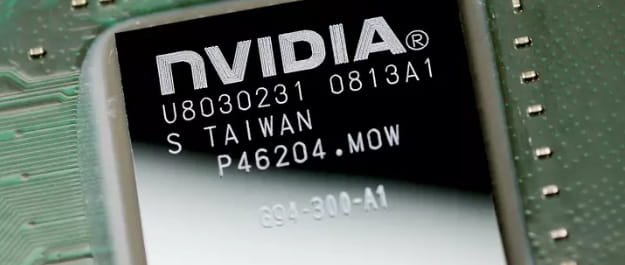
Nvidia’s transformation from a gaming-centric business to a data center powerhouse is the primary catalyst behind its legendary stock performance. While the gaming segment remains healthy, the Data Center division now accounts for the lion’s share of Nvidia’s revenue and profit. This shift isn’t accidental; Nvidia’s CUDA software platform created a “moat” that makes it incredibly difficult for developers to switch to competing hardware. When you buy an Nvidia chip, you aren’t just buying hardware; you are buying into an entire ecosystem that has become the industry standard for AI training and inference.
The demand for Nvidia’s Hopper and Blackwell architectures is essentially a proxy for the global AI arms race. Cloud service providers (CSPs) like AWS, Google Cloud, and Azure are in a frantic cycle of capital expenditure to ensure they have the compute power necessary to host the next generation of Large Language Models (LLMs). This creates a “virtuous cycle” for Nvidia stock: as AI models become more complex, they require exponentially more compute power, which only Nvidia can currently provide at scale. This dominance has allowed Nvidia to maintain eye-watering gross margins that exceed 70%, a rarity in the hardware world.
However, the question for 2026 is whether this level of spending is sustainable. Investors are starting to ask about the “ROI on AI.” If companies spending billions on Nvidia chips don’t start seeing a clear path to profitability from their AI features, the capital expenditure budgets could eventually tighten.
The Valuation: Is NVDA Stock Priced for Perfection?
The P/E Ratio vs. Forward Growth
One of the most debated aspects of Nvidia stock is its Price-to-Earnings (P/E) ratio. At first glance, the trailing P/E might look astronomical compared to the S&P 500 average. However, growth investors argue that looking at trailing earnings is a mistake for a company growing this fast. When you look at the “Forward P/E,” which accounts for projected earnings over the next 12 months, Nvidia often looks surprisingly reasonable—sometimes even cheaper than traditional “value” stocks that have zero growth.
The risk here lies in the “Forward” part of that equation. A forward P/E is only as good as the analyst’s estimates. If Nvidia’s growth slows from 100% to 20%, that forward P/E suddenly jumps, and the stock looks overvalued overnight. This is why Nvidia’s quarterly earnings calls have become the most important events on the financial calendar; the market isn’t just looking at the past quarter, it’s obsessively scanning the “Guidance” for any sign of a slowdown.
The Blackwell Cycle and Beyond
Nvidia’s ability to justify its valuation depends heavily on its execution of new product cycles. The transition to the Blackwell architecture is the current focus, promising massive leaps in efficiency and raw power. If Nvidia can continue to innovate at this pace, it effectively resets the clock on its competition every 18 to 24 months. This rapid innovation cycle justifies a “growth premium” in the eyes of many institutional investors who see Nvidia as the primary engine of the Fourth Industrial Revolution.
But we must also consider the “Law of Large Numbers.” It is much harder to double revenue when you are already doing $100 billion a year than it was when you were doing $10 billion. As Nvidia becomes a larger part of the total market cap of the S&P 500, its ability to outperform becomes mathematically more difficult. Investors must decide if they are paying for the Nvidia of today or a future Nvidia that captures almost every dollar of global AI spend—a scenario that leaves little room for error.

Competitive Landscape: Can Anyone Catch the King?
The Rise of Custom Silicon (ASICs)
The biggest threat to Nvidia stock might not come from traditional rivals like AMD or Intel, but from its own biggest customers. Companies like Google (TPUs), Amazon (Trainium), and Microsoft (Maia) are all developing their own custom AI chips. These “Application-Specific Integrated Circuits” (ASICs) are designed to run specific workloads more efficiently and cheaply than Nvidia’s general-purpose GPUs. If these tech giants can move even 20% of their workloads to their own silicon, it represents a direct hit to Nvidia’s long-term growth trajectory.
Nvidia’s defense against this is the sheer versatility of its chips and the ubiquity of its software. While a Google TPU might be great for a specific Google task, Nvidia’s H100s are the “Swiss Army Knives” of the AI world, capable of handling anything a developer throws at them. Furthermore, the developer community is so deeply entrenched in its CUDA that moving away from it requires a massive investment in time and retraining. This software lock-in is perhaps Nvidia’s strongest shield against the rise of custom silicon.
AMD and the Open-Source Challenge
We cannot ignore AMD and its MI300 series. AMD is positioning itself as the “open” alternative to Nvidia’s “closed” ecosystem, betting that the industry will eventually rebel against Nvidia’s high prices and proprietary software. While AMD is currently playing catch-up, history shows that open standards often win in the long run (think Android vs. iOS in terms of market share, even if iOS wins on profit).
If the AI industry moves toward open-source software frameworks like PyTorch and Triton that aren’t tied to CUDA, the barrier to entry for AMD and other startups drops significantly. For an Nvidia stock analysis, this means watching the “software layer” just as closely as the “hardware layer.” If the software moat begins to evaporate, Nvidia stock will have to compete on price, which would inevitably compress those 70%+ margins and force a re-rating of the stock.
Macro Risks for Nvidia Stock: Geopolitics and the Supply Chain
Nvidia is a “fabless” chipmaker, meaning it designs the chips but relies on TSMC (Taiwan Semiconductor Manufacturing Company) to actually build them. This creates a massive geopolitical bottleneck. If tensions in the Taiwan Strait escalate, its supply chain could be severed overnight. No other foundry in the world can currently match TSMC’s advanced manufacturing nodes at the scale Nvidia requires. This “single point of failure” is the elephant in the room for every NVDA stock investor.
Additionally, US export restrictions on high-end AI chips to China remain a significant headwind. China has historically been a massive market for Nvidia, and while the company has designed “slowed-down” versions of its chips to comply with regulations, the gap is narrowing. If the US government further tightens these restrictions, or if Chinese firms successfully develop their own high-end alternatives out of necessity, it loses a major pillar of its global growth strategy.
Finally, we have the risk of a broader economic slowdown. While AI is a secular growth trend, it is not immune to a global recession. If corporate earnings across the board begin to fall, the first thing to get cut is often the “moonshot” R&D budget. While AI is seen as a productivity tool, in a deep recession, survival takes precedence over innovation.
Conclusion: The Verdict on Nvidia Stock
Nvidia remains the most important company in the most important sector of the global economy. Its technical lead is undisputed, its financial performance is historic, and its visionary leadership continues to outpace the competition. However, a successful Nvidia stock analysis requires a balance of optimism and caution. We are at a stage where “good” news isn’t enough; it has to deliver “extraordinary” news just to keep its current price level stable. The Blackwell cycle will be the ultimate test of whether the AI boom has another gear or if we are approaching a plateau.
For the long-term investor, the “buy the dip” strategy has been the most successful trade of the decade. But for those entering now, position sizing and risk management are more important than ever. Don’t bet the house on a single earnings print. Instead, look at Nvidia as the foundational piece of a broader tech portfolio, while keeping a close eye on the “ROI on AI” and the geopolitical climate in Taiwan. The AI story is still in its early chapters, but as any reader knows, the middle of the book is often where the most dramatic plot twists occur.
At usmarketinvesting.com, we believe Nvidia stock will continue to be a market leader, but the era of “easy gains” may be shifting into a period of higher volatility and sector rotation. Stay informed, keep your emotions in check, and remember that even the strongest bull runs need to stop for a breath eventually. Whether you believe in the AI revolution or not, Nvidia’s journey is a masterclass in corporate evolution that will be studied for decades to come.