If there is one ticker symbol that has defined the last two decades of investing, it is undoubtedly AAPL. For years, buying Apple Stock was the easiest decision a retail investor could make—you bought it, you held it, and you watched your portfolio turn green. But here we are in early 2026, and the narrative has shifted slightly. We aren’t just looking at a hardware company anymore; we are looking at a mature, diversified ecosystem that is fighting to maintain its dominance in an era defined by rapid artificial intelligence advancements and shifting consumer habits.
The question on everyone’s mind isn’t whether Apple is a safe company, but whether it can still deliver the kind of market-beating returns we have grown addicted to.
The landscape in 2026 is vastly different from just a few years ago. The smartphone market has reached a saturation point where annual upgrades are no longer a guaranteed habit for the average consumer. However, Apple has countered this by pivoting aggressively toward services and integrating “Apple Intelligence” into every crevice of its operating systems. As investors, we have to look past the shiny product launches and analyze the engine under the hood. Is the current valuation justified by future cash flows, or are we paying a premium for a legacy brand that has stopped innovating?
In this analysis, we are going to strip away the marketing hype and look at the cold, hard numbers and strategic positioning. We will explore how the transition from hardware sales to recurring service revenue is stabilizing the stock, how their late-but-steady entry into the AI race is paying off, and what the charts are telling us about the future.
iPhone Empire in a Saturated Market
For the longest time, the heartbeat of Apple Stock was the iPhone release cycle. Every September, analysts would hold their breath to see if the new model would trigger a “supercycle” of upgrades. In 2026, the reality is a bit more nuanced. The iPhone is no longer just a gadget; it is the remote control for our digital lives. While unit sales growth has leveled off compared to the explosive 2010s, Apple has managed to increase the average selling price (ASP) significantly. By pushing users toward the “Pro” and “Ultra” models, they have managed to keep revenue climbing even when the sheer number of devices sold remains relatively flat.
However, the real story in 2026 is how the iPhone has become a gateway drug for the rest of the ecosystem. You don’t just buy an iPhone anymore; you buy into a lifestyle that demands an Apple Watch for your wrist and AirPods for your ears. This hardware stickiness is what keeps the floor price of the stock so high. Even with competitors launching impressive foldable phones and AI-first devices, the retention rate for iPhone users remains the envy of the industry. Once a consumer is locked into iMessage and iCloud, the switching costs are simply too high, providing a protective moat around Apple stock revenue stream that few other companies can claim.
That said, we cannot ignore the growing reliance on emerging markets. As North American and European markets hit peak saturation, Apple’s aggressive expansion into India and Southeast Asia has become the new growth narrative. In 2026, we are finally seeing the fruits of the supply chain diversification that began years ago. These markets are not just manufacturing hubs; they are becoming significant consumer bases.
Services: The Silent Cash Machine Powering the Stock
If hardware is the body of Apple, the Services division is its soul—and increasingly, its profit engine. When analyzing Apple Stock in 2026, you simply cannot overstate the importance of this segment. We are talking about the App Store, Apple Music, iCloud+, Apple TV+, and Apple Pay. Unlike hardware, which has lower margins and relies on shipping physical atoms across the globe, services are high-margin, recurring revenue streams. This shift has fundamentally changed how Wall Street values the company.
Apple is trading less like a cyclical hardware manufacturer and more like a subscription-based SaaS (Software as a Service) company, which commands a much higher price-to-earnings multiple.
The beauty of the Services segment lies in its predictability. In uncertain economic times, a consumer might delay buying a $1,200 phone, but they are unlikely to cancel their $2 cloud storage plan or cut off their music subscription. This creates a cushion for the stock during market downturns. In 2026, we have seen Apple bundle these services even more aggressively, making it almost illogical for a user not to subscribe to Apple One. This strategy increases the “Lifetime Value” (LTV) of every customer. Every time Apple adds a subscriber, they are essentially printing pure profit, which flows directly into the massive cash pile used for dividends and buybacks.
However, this Apple stock’s golden goose isn’t without its wolves. Regulatory scrutiny regarding the App Store’s commission fees has reached a fever pitch globally. In 2026, we are seeing the impacts of the Digital Markets Act in Europe and similar rumblings in the US. While Apple has been forced to open up its “walled garden” slightly, allowing for alternative app stores and payment methods, the catastrophic revenue drop predicted by bears hasn’t materialized.
Apple Intelligence: Playing Catch-Up or Playing it Smart?
The narrative around Apple Stock for the last two years has been dominated by two letters: AI. Initially, critics argued that Apple was falling behind nimble competitors who rushed generative AI products to market. But 2026 has proven that Apple’s strategy of “wait, perfect and integrate” was the correct play. Instead of launching a standalone chatbot that hallucinates facts, Apple integrated “Apple Intelligence” directly into the core of iOS and macOS. This on-device, privacy-focused approach has resonated with the average consumer who wants AI to be helpful, not creepy.
The integration of AI has breathed new life into the hardware upgrade cycle. Because the new AI features require significant processing power (NPU), users holding onto three-year-old phones are finally finding a compelling reason to upgrade. This has created a shadow “AI Supercycle” that isn’t driven by a new camera lens or a titanium chassis, but by the software capabilities that only new chips can unlock. For investors, this is the sweet spot. It bridges the gap between hardware sales and software utility, proving that Apple can monetize AI without necessarily charging a separate subscription fee for it—though that option remains a lucrative possibility for the future.
Furthermore, Siri has finally evolved from a frustrating digital assistant into a truly capable agent. In 2026, Siri can navigate across apps, summarize emails, and perform complex tasks that actually save users time. This stickiness prevents users from defecting to other AI platforms. While Apple may not be selling the “shovels” in the AI gold rush like chip manufacturers, they are selling the luxury houses where the gold is stored. By controlling the interface between the human and the AI model, Apple ensures they remain the gatekeeper of the digital experience, securing their relevance for the next decade.
The Vision Pro and the Future of Spatial Computing
When the Vision Pro launched, many dismissed it as an expensive toy, but in 2026, we are starting to see the long-term vision take shape. It hasn’t replaced the iPhone—and it likely won’t anytime soon—but it has carved out a profitable niche in enterprise and high-end entertainment. For Apple Stock investors, the headset represents optionality. It is a bet that the future of computing isn’t a screen in your pocket, but a canvas in front of your eyes.
The slow burn of the spatial computing category mirrors the early days of the Apple Watch. It started clunky and confused, but refined over time into an essential health device. The current iteration of Apple’s headset is lighter, cheaper, and supported by a robust ecosystem of spatial apps. While it doesn’t contribute a massive percentage to the bottom line yet, it proves that Apple’s innovation engine hasn’t stalled. It provides a “call option” on the future; if the metaverse or spatial computing becomes the standard, Apple is already the hardware leader.
Financial Fortress: Buybacks, Dividends, and Cash Flow
If there is one reason institutional investors sleep well at night holding AAPL, it is the company’s capital return program. Apple is essentially a financial fortress. In 2026, the company continues to generate an obscene amount of free cash flow, and they are not shy about giving it back to shareholders. The aggressive share buyback program acts as a constant upward force on the stock price. By reducing the total number of outstanding shares, Apple artificially inflates its Earnings Per Share (EPS), making the stock look more attractive even during quarters of flat revenue growth.
Additionally, while Apple is not known as a high-yield dividend stock, its consistent dividend growth makes it a favorite for “Dividend Growth” investors. It is the ultimate compounder. The massive cash pile also allows Apple to acquire smaller AI startups or invest in custom silicon manufacturing without taking on dangerous debt. In a high-interest-rate environment, having zero net debt and a war chest of cash is a supreme competitive advantage that justifies a premium valuation compared to debt-heavy tech peers.
Valuation and Risks: Is the Price Right?
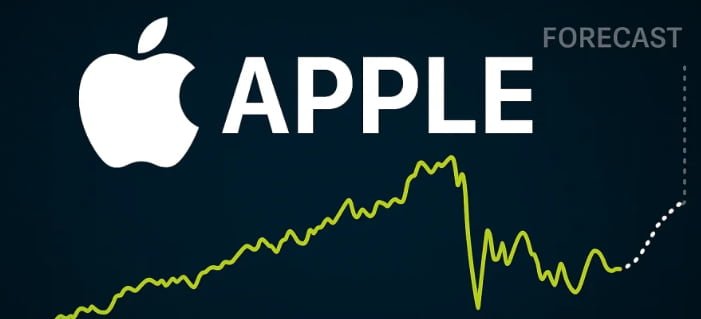
So, is Apple Stock a buy at current levels? In 2026, Apple typically trades at a premium P/E (Price-to-Earnings) ratio compared to the broader market, and rightfully so. You are paying for safety, quality, and predictability. However, investors need to be wary of valuation compression. If growth slows down significantly, Wall Street might decide that Apple should be valued more like a utility company than a tech growth star, which could lead to a painful correction in the stock price.
The risks remain geopolitical and regulatory. The supply chain is still heavily reliant on China, and tensions there can send shockwaves through the stock. Furthermore, antitrust lawsuits in the US and EU are ongoing threats that could force Apple to dismantle parts of its lucrative services model. While Apple has navigated these waters expertly so far, the regulatory hammer is always swinging. Investors should view AAPL as a core holding but must remain vigilant about these macro headwinds that are largely out of the company’s control.

Conclusion: Is Apple Stock Still Opportunity?
As we move deeper into 2026, Apple remains a paradox: it is too big to grow at startup speeds, yet too innovative to be called a dinosaur. The analysis of Apple Stock shows a company that has successfully transitioned from a hit-driven hardware manufacturer to a diversified services and lifestyle juggernaut. The integration of AI has provided a necessary bridge to the next generation of computing, and the services revenue provides a safety net that few other companies possess.
For the conservative investor, Apple remains a cornerstone portfolio piece—a “set it and forget it” stock that offers capital preservation and steady growth. For the aggressive growth seeker, however, the days of doubling your money in a single year with AAPL are likely behind us. The upside is now driven by margin expansion, buybacks, and steady dividends rather than explosive user growth.
Ultimately, betting against Apple has historically been a losing game. With a loyal customer base that borders on religious devotion and a balance sheet that rivals sovereign nations, Apple is well-positioned to weather whatever economic storms 2026 brings. It might not be the most exciting trade on the board, but in a volatile market, boring is beautiful. If you don’t own it yet, waiting for a dip is a smart strategy, but leaving it out of your portfolio entirely might be a risk you don’t want to take.